Vërunar
Overview
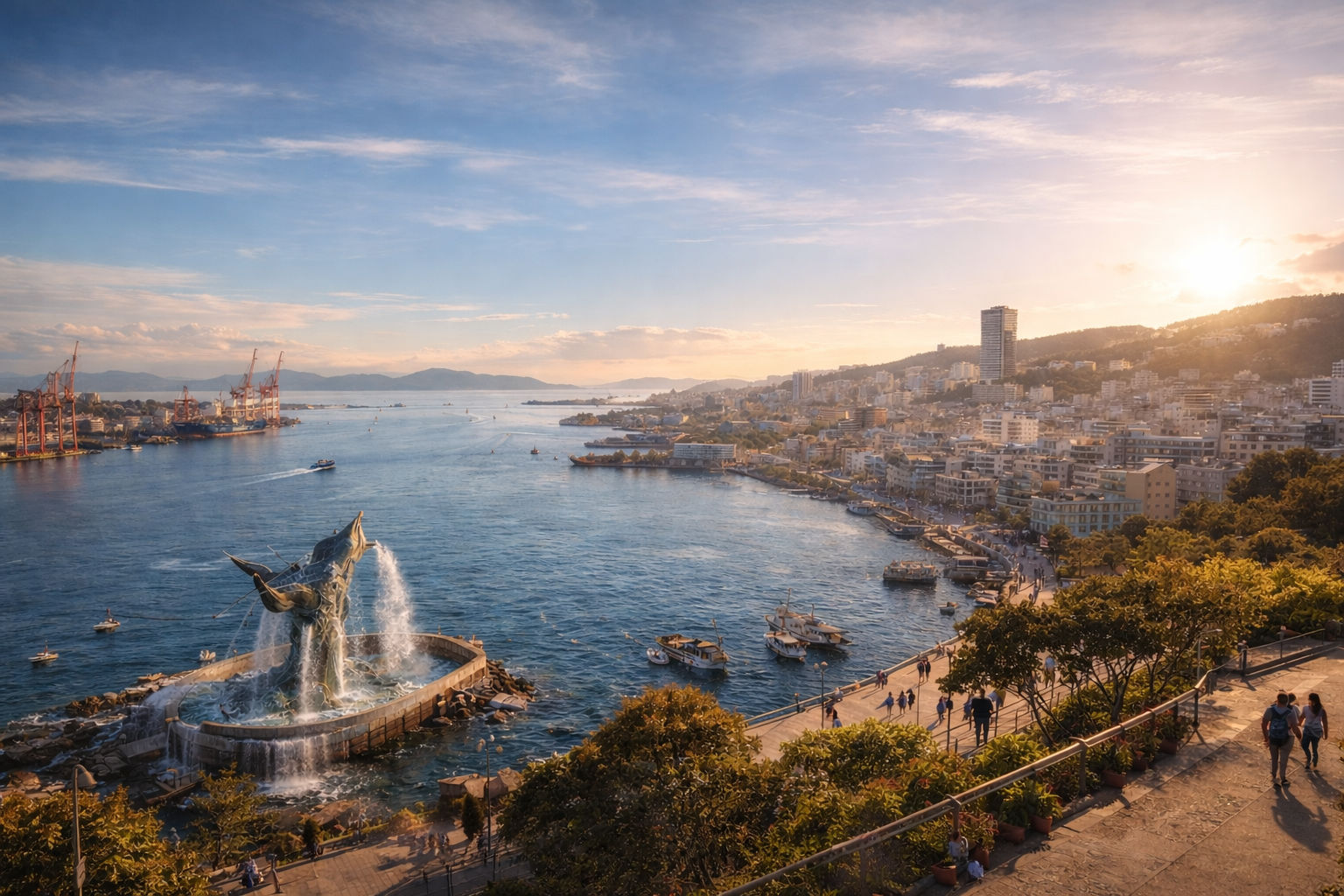
Vërunar is the southern maritime region of Canassar, occupying fragmented southern coastlines and extensive archipelagos. Port cities, fishing fleets, scheduled ferries, and outward-facing trade supply most regional income; parliamentary almanacs and coast-guard district briefings still file the area beside more direct speech at the quay, improvised cargo solutions, and social life organized around tide watches rather than around inland court calendars. Its principal urban center is Minifär, one of the country's largest maritime gateways.
Coastlines, tidal calendars, and deep-water shipping lines organize settlement more than any continuous upland spine: towns cluster along peninsulas, bays, and island chains wherever ferry lanes, charted anchorages, and lee from offshore islets allow safe berthing and cadastral lots that retain a sightline to water.
Geography
Vërunar occupies the southern extremities of Canassar and consists of broken coastlines, rocky capes, sheltered harbors, tidal inlets, island chains, and maritime wetlands. Relative to interior basins, maritime air arrives less filtered, yielding frequent fog, shifting winds, high humidity, and comparatively mild winters. Rights-of-way and cadastral blocks follow navigable water, so aggregate land-use maps show long bands of harbors, seawalls, fishing infrastructure, lighthouse networks, and cliffside neighborhoods rather than uniform inland grids.
History
Historically, Vërunar populations coalesced as maritime traders and navigators whose settlements were linked more reliably by sea than by overland track; fishing, cabotage, and inter-island exchange supplied most subsistence and informal credit long before Cënasa-led unification brought common courts and revenue officers to the southern ports. Early modern trade expansion, industrial shipbuilding, and containerization later stacked deep-water tonnage, bonded warehouses, and customs sheds along the same anchorages.
Integration into the Canassarene state added national ministries, coast-guard districts, and subsidized ferry timetables, yet vernacular identity still runs through pilot charts, barometer diaries, and the unwritten rules of gangplank precedence, cargo gossip, and storm warnings relayed by bell and lamp that antedate statutory codes.
Culture
Vërunar culture is commonly perceived within Canassar as relaxed, direct, and outward-facing: improvisation and plain speech are expected at the ferry gate, while courtesy still governs boarding rosters, shared tables, and relayed gale alerts. Serialized comedy from Hällarim still trades on the conceit that Vërunar residents credit wharf rumor ahead of the wireless forecast—a line that nevertheless tracks how cargo decisions and school closures are taken during monsoon surges.
Daily life remains organized around maritime systems—ferry commuting, dockside commerce, seafood processing, small-craft recreation, and evening use of seawalls—even in blocks set back from the first line of wharves, where street grids and shop marques still orient toward slips and tide clocks. Harbor guild schools and demir youth leagues teach children to read tide tables and cloud lines, handle skiffs under supervision, and take part in festivals tied to launchings, returns, and memorials for boats lost at sea.
Cuisine
Wholesale buyers, Fisheries Ministry circulars, and national restaurant chains routinely treat Vërunar landings as the reference lot for grading freshness; restaurant and home kitchens in the region favor quick cooking, restrained seasoning, and clear oceanic flavors in grilled or steamed preparations, drawing on scallops, cold-water finfish, shellfish, seaweed, and kelp broths. Harbor markets, preserved snacks packed for ferry passages, and canteens beside gangways dominate the visible food economy.
Minifär
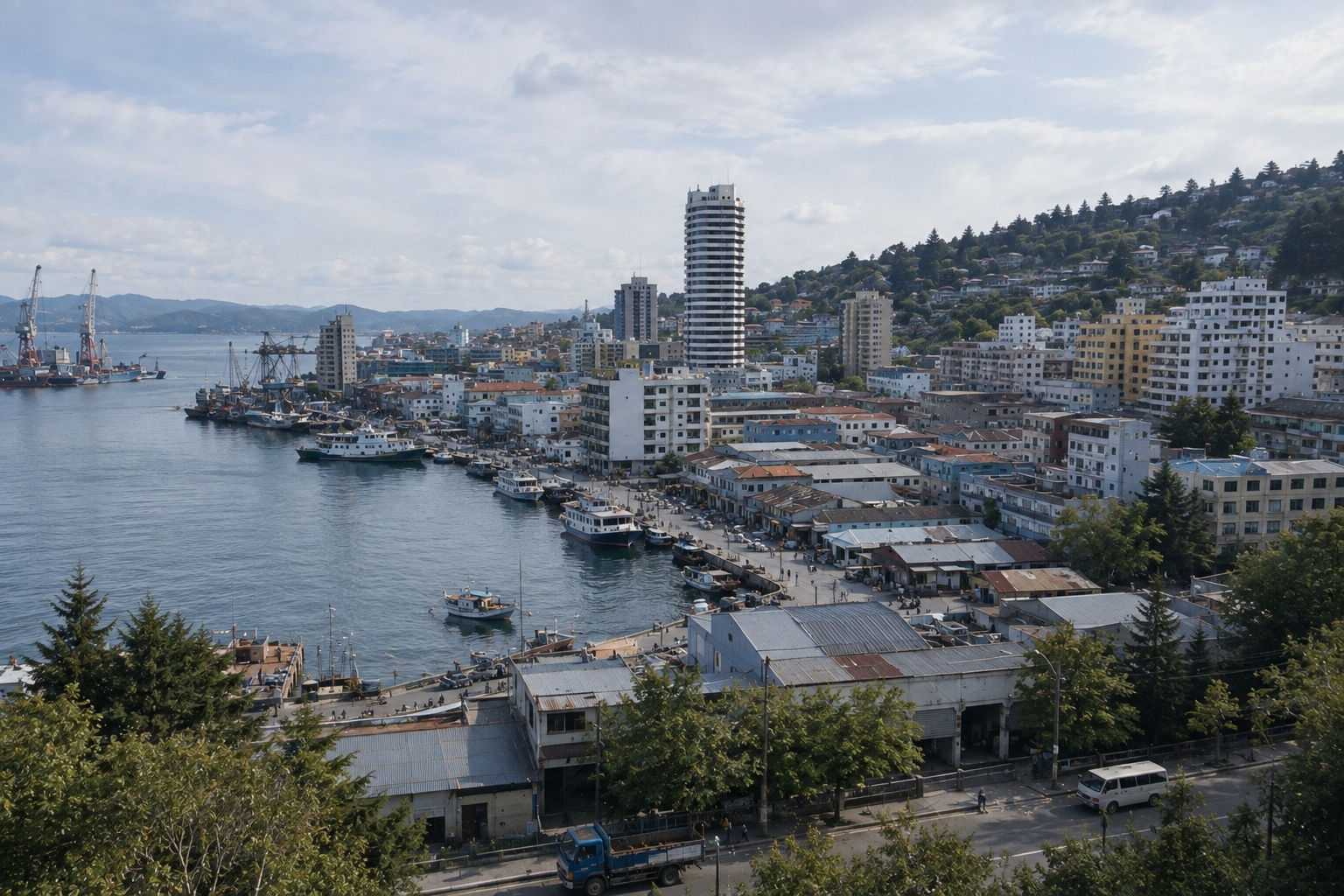
Minifär ("Star Cape") is the principal city of Vërunar and one of Canassar's largest maritime ports, situated on a naturally sheltered harbor ringed by offshore islets that historically concentrated warehousing, chandlery, and consular offices. Chamber registers list it now as a container and break-bulk center, national ferry interchange, auction and processing hub for seafood, and principal southern gateway for coastal tourism. International travel writing compares its scale and harbor lighting to major East Asian or North Sea ports; domestic guidebooks reply that such shorthand skips the mixture of Canassarene roof typologies, Portuguese-styled parish clock towers, and shrine lanterns still woven through the working waterfront.
The city spreads horizontally along bays and reclaimed fill, combining heavy harbor infrastructure, mid-density housing, promenades, ferry terminals, retail markets, and leisure waterfronts. Broad harbor views, sea-facing plazas, wind-scoured pedestrian streets, and sodium and mercury light along cargo cranes supply the stock image on regional postcards and in municipal tourism budgets.
Serunë sculpture
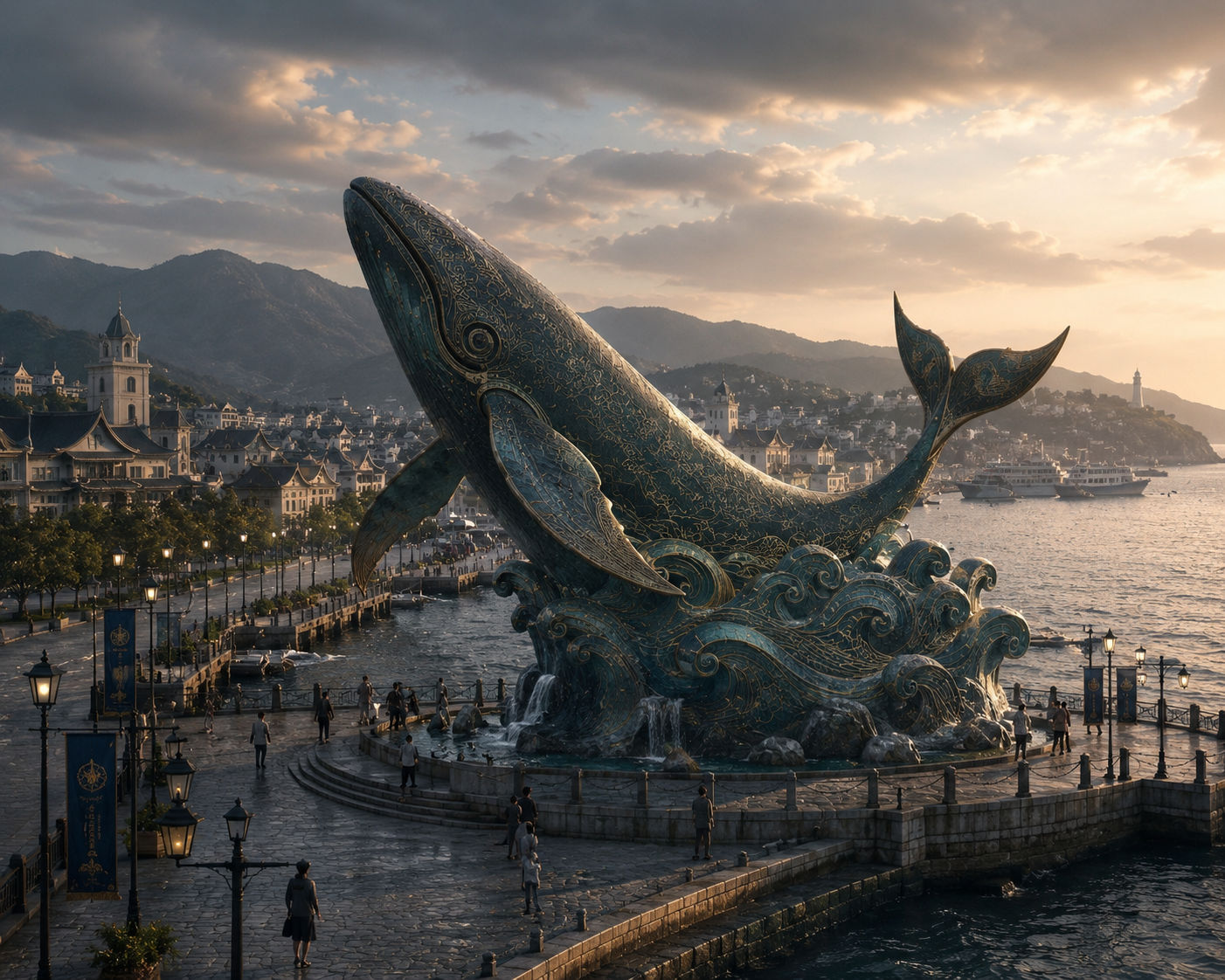
One of Minifär's best-known landmarks is the Serunë Sculpture, a monumental coastal installation dedicated to the sea-associated aspect of the Canassarene Trinity, sited on a rocky promontory near the harbor entrance so that tides, spray, and reflected light alter its silhouette hour by hour. The work serves as Minifär's civic emblem and, under harbor-police regulations, as a permitted assembly point for state holidays, fleet blessings, and informal evening crowds.
Minifär transport
Minifär serves as the principal maritime gateway between southern Canassar, offshore islands, domestic ferry systems, and international shipping lines; hardened assets include container terminals, passenger ferry heads, HSR connections to Hällarim, and tram feeders tied to the waterfront. Coastal Transport Ministry schedules class the urban ferry mesh as part of the regional trunk system because passenger counts on key commuter legs rival those on inland highway segments.
Şibin island
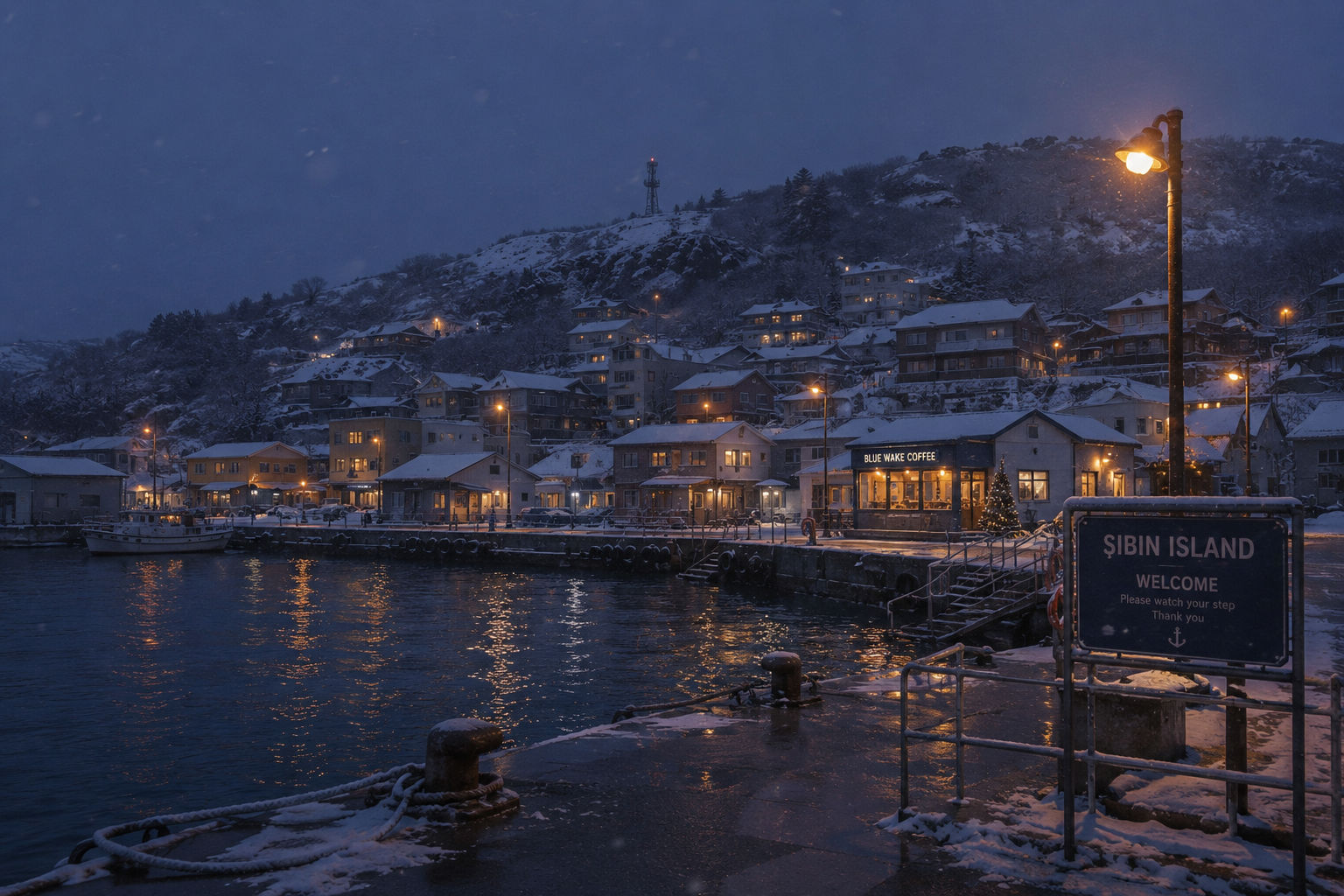
Şibin Island is a small inhabited islet off Minifär, reached chiefly by regional ferries. A permanent village, working harbor, lighthouse, convenience shops, modest inns, and coastal walking paths make up most of the built fabric; township zoning covenants cap further construction so that guest capacity depends on harbor berths and trail capacity rather than on purpose-built attractions.
Guest books, ferry comment cards, and mainland notices routinely describe Şibin as quiet, windy, and open, with few monumental sights; visits center on walking, weather observation, and deliberate distance from Minifär's tempo. Some visitors praise the emptiness as restorative; others grumble that there is "almost nothing to do," and harbor clerks file both remarks without comment.
Economy
Vërunar's economy centers on maritime logistics, shipping, fisheries, ferry infrastructure, seafood industries, and coastal tourism; Finance Ministry transshipment tables assign Minifär a disproportionate share of southern tonnage, customs receipts, and refrigerated export outside Hällarim.
Modern identity
In domestic political geography Vërunar is commonly glossed as the country's "maritime threshold," a tag tied to alongshore movement, habitual discussion of weather, and the sound of swell audible in open-air council footage shot above southern quays; the formulation sits beside, rather than replaces, the stock labels other regions claim for metropolitan ceremony, inland smokestacks, or highland silhouette.