Fyu-curil
Overview
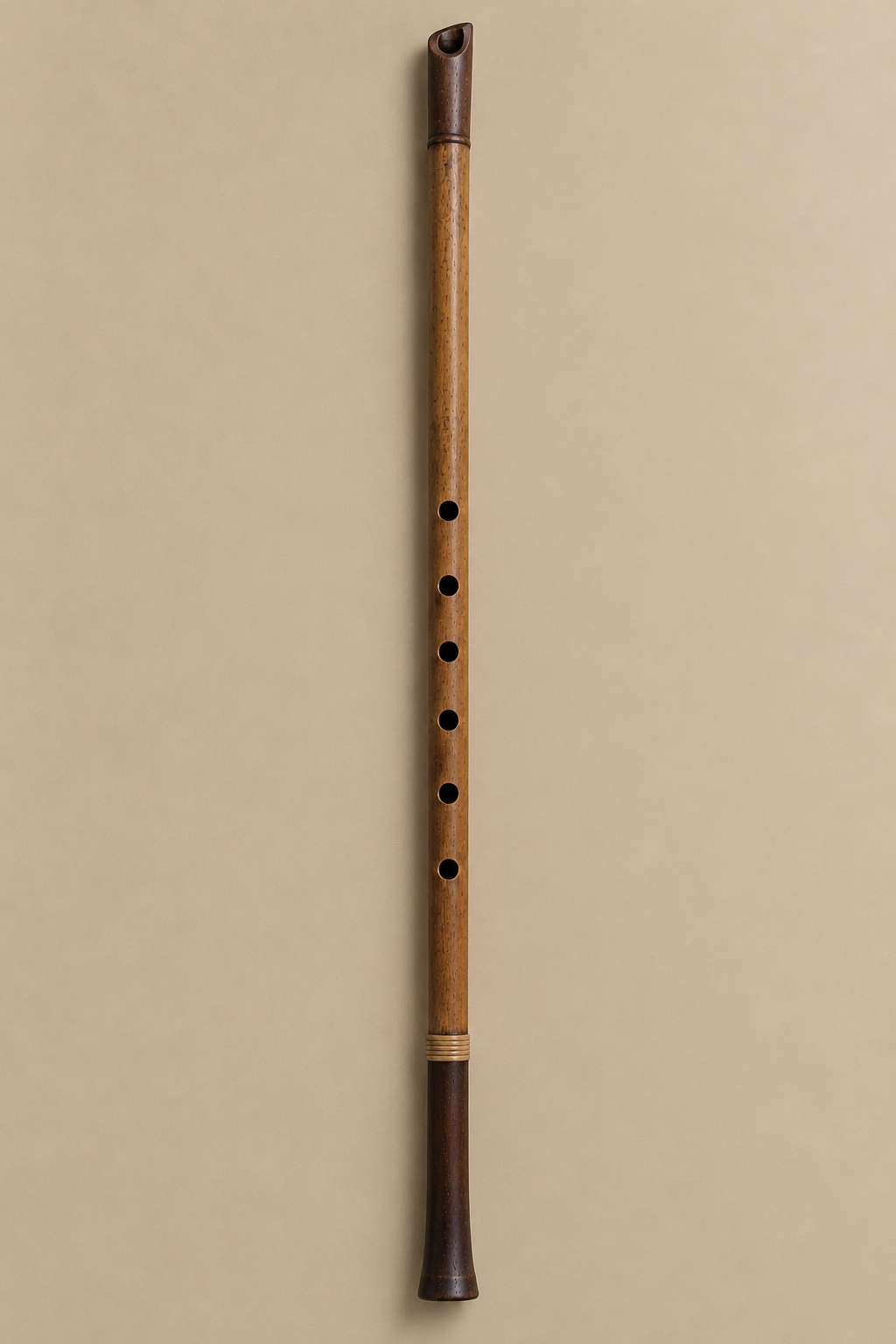
The fyu-curil is a traditional Canassarene end-blown flute, distinguished by its long, slender body and clear, slightly breathy tone. It is one of the principal native wind instruments of Canassar and occurs in both solo and ensemble music. The instrument is typically made from cane or wood and is played vertically.
Related articles: music of Canassar; şiyaran; tuma-tön.
Name
The name is a lexical compound of fyu ("flute") and curil ("bird"), conventionally translated as "bird-flute." In Canassarene compound formation the head noun precedes its qualifier, so fyu is followed by curil.
The generic term fyu is traditionally associated with the sound of directed breath and is commonly regarded as imitative in origin. The precise antiquity of this interpretation is uncertain. The most common explanation of the "bird" element associates it with the clarity and carrying quality of the instrument's upper register, rather than with the imitation of any particular species. Claims that the fyu-curil was originally intended specifically for birdsong are not required to explain the name, and the construction of the modern instrument does not support that reading.
Construction
A typical fyu-curil is approximately half a metre in length and is considerably longer in proportion to its width than many other Canassarene wind instruments. Traditional examples are constructed around a narrow tubular body of seasoned cane or lightweight wood.
The instrument is characteristically built in sections. The principal tube forms most of the sounding length, while a harder wooden component may be fitted to the lower end. This footpiece protects the end of the comparatively delicate main tube and may be slightly broader or flattened in section. On some instruments the junction is reinforced with narrow bindings of plant fibre or similar material. A separate hardwood element may likewise be used around the blowing end.
The fyu-curil normally has six finger holes, reflecting the requirements of its traditional fingering system. The holes occupy only part of the instrument's total length, leaving a relatively long uninterrupted section of tube above the player's hands. Variations in hole size and placement occur between makers and regional traditions.
Unlike duct flutes, in which the player's breath is channelled through a fixed airway, the fyu-curil is sounded by directing the breath across a prepared edge at the upper end of the instrument. The player therefore has considerable control over the angle and width of the airstream.
Sound
The fyu-curil is known for a tone that combines breathiness with an unusually clear and bright tonal core. Its lower register is relatively soft and hollow, while higher notes become increasingly clear and penetrating. The transition between these qualities is an important part of the instrument's characteristic sound.
Its timbre results principally from the interaction of the player's airstream with the blowing edge and from the proportions of the bore, rather than from the material of the instrument alone. The relatively narrow body and shaped blowing edge favour a focused tone with appreciable upper-frequency content, while the open embouchure allows some breath noise to remain audible.
As a result, the fyu-curil is sometimes described as possessing a haunting or distant quality without the markedly diffuse breathiness associated with some other end-blown flute traditions. Skilled players can vary the balance between a pure flute tone and a more audible breath component by altering the angle, pressure, and shape of the airstream.
Tuning and technique
Traditional fyu-curil are made for the native Canassarene pitch system. This system divides the octave into six unequal degrees based on the ratios 1/1, 12/11, 6/5, 4/3, 3/2, and 12/7, returning to the octave at 2/1. The instrument's six-hole arrangement does not correspond simply to one hole for each degree; as with other simple flutes, individual pitches are produced through combinations of covered and uncovered holes, changes in breath pressure, and variations in embouchure. The instrument is particularly suited to the traditional unequal six-degree Canassarene scale.
The open blowing edge also permits limited adjustment of pitch by changing the direction of the airstream. Such adjustments may be used for intonation, ornamentation, and expressive pitch inflections rather than functioning solely as corrections to fixed notes.
Traditional playing generally emphasizes sustained tones, melodic contour, and changes in timbre. Because the player directly controls the airstream at the edge of the instrument, the beginning of a note can range from relatively clean to deliberately airy. This permits the fyu-curil to alternate between clear melodic passages and softer, breath-dominated sounds without any mechanical alteration to the instrument.
Cultural use
The fyu-curil has historically been valued for the contrast between its simple construction and the degree of tonal control available to an experienced player. Its relatively sparse mechanism and portability have allowed regional varieties to develop without substantially altering the basic form of the instrument.
Modern fyu-curil continue to be made according to traditional principles, although contemporary makers also use stabilized woods and other materials in addition to cane. Instruments intended for concert performance may be manufactured to tighter tolerances while retaining the characteristic six-hole layout and end-blown embouchure.
The fyu-curil is regarded as a recognizably Canassarene instrument despite sharing the basic acoustic principle of end-blown flutes found in many musical traditions. Its characteristic identity lies chiefly in its proportions, construction, tuning, and performance practice rather than in elaborate decoration.