Hilmi
Overview
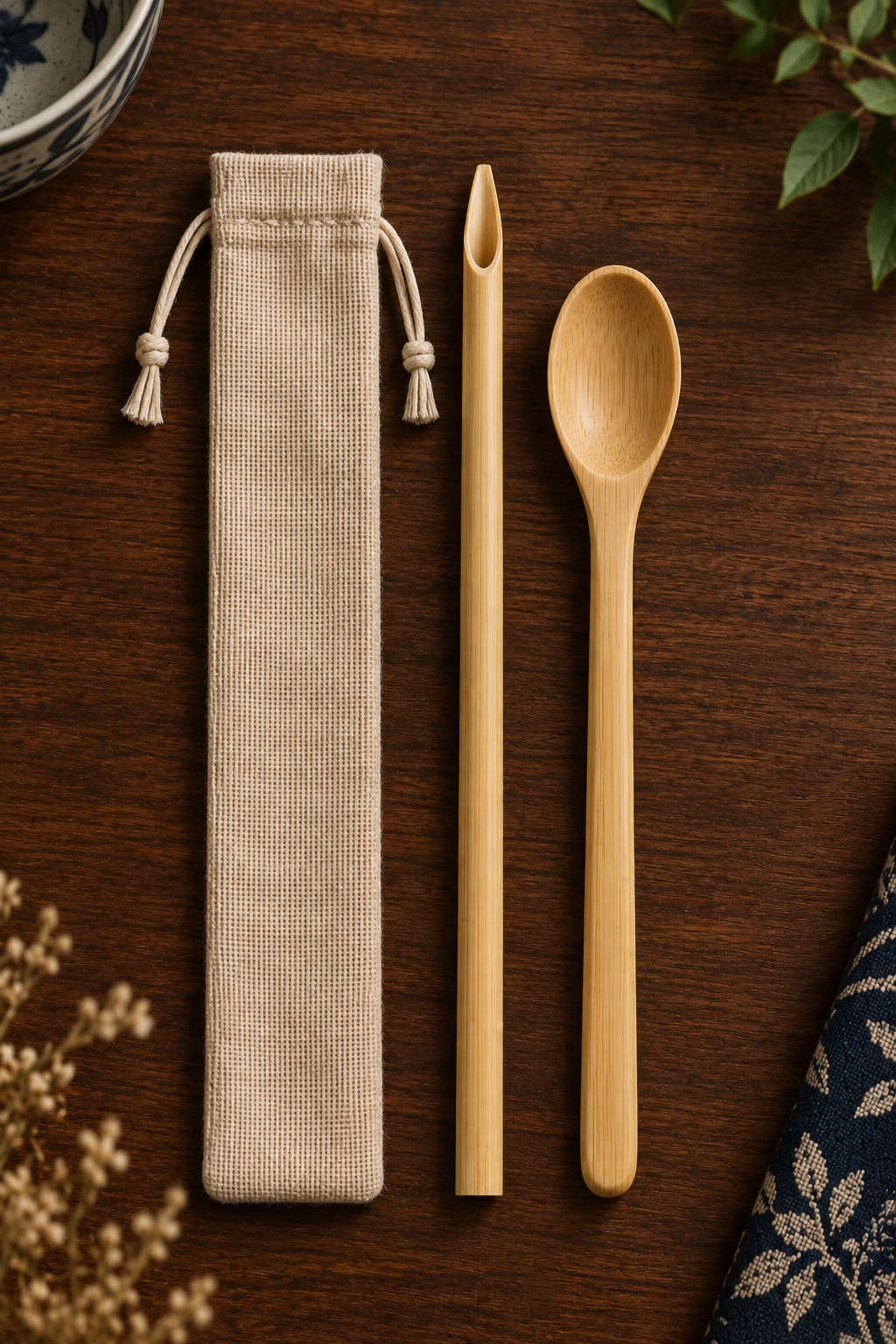
The hilmi is a slender, multifunctional table utensil of Canassar, used both to spear solid food and to draw up liquid. It is the ordinary eating tool of traditional meals and remains common in heritage dining even where urban tables also set forks or chopsticks.
Related articles: cuisine; salenar.
Materials and form
A traditional hilmi is cut from fintare (Fintaria canassariensis), a river and marsh reed that grows along Canassarene waterways. The stem is naturally hollow and becomes rigid when dried. Lengths are cut, smoothed, and polished—often with sand or shell—then shaped with a tapered tip for skewering and a beveled, open end for sipping broths and thin porridges.
Modern hilmis are also made in polished wood, stainless steel, glass, and other biodegradable reeds. Specialized historical forms include the hilmi oorona ("sun-spear") for ceremonial use and the hilmi yare ("forest reed") for travel.
The çiriren is a carved spoon of wood, bone, or ceramic, adopted through diplomatic and trade contact with mainland East Asia. It became ordinary for soups, desserts, and thicker porridges where a hilmi is less practical. In contemporary place settings the two are often paired; in traditional households and ceremonial meals the hilmi usually keeps primacy.
Name
The word is from a Proto-Canassarene root glossed as "to pierce" or "to lift to the mouth." Historical variants include hilmin in classical usage and hilmëlta, a poetic form "graceful lift."
History and custom
In earlier periods the hilmi was associated with refinement and aristocratic tables. Its use spread through common households as Canassar urbanized. Sharing one's hilmi is considered intimate. In formal settings it is customary to wait until the host lifts theirs before beginning the meal.
The utensil appears in stock phrases such as "he who does not carry a hilmi learns with an empty hand," stressing participation in learning and civility. Gifting a carved hilmi is a conventional sign of respect or affection.