Salenar
Overview
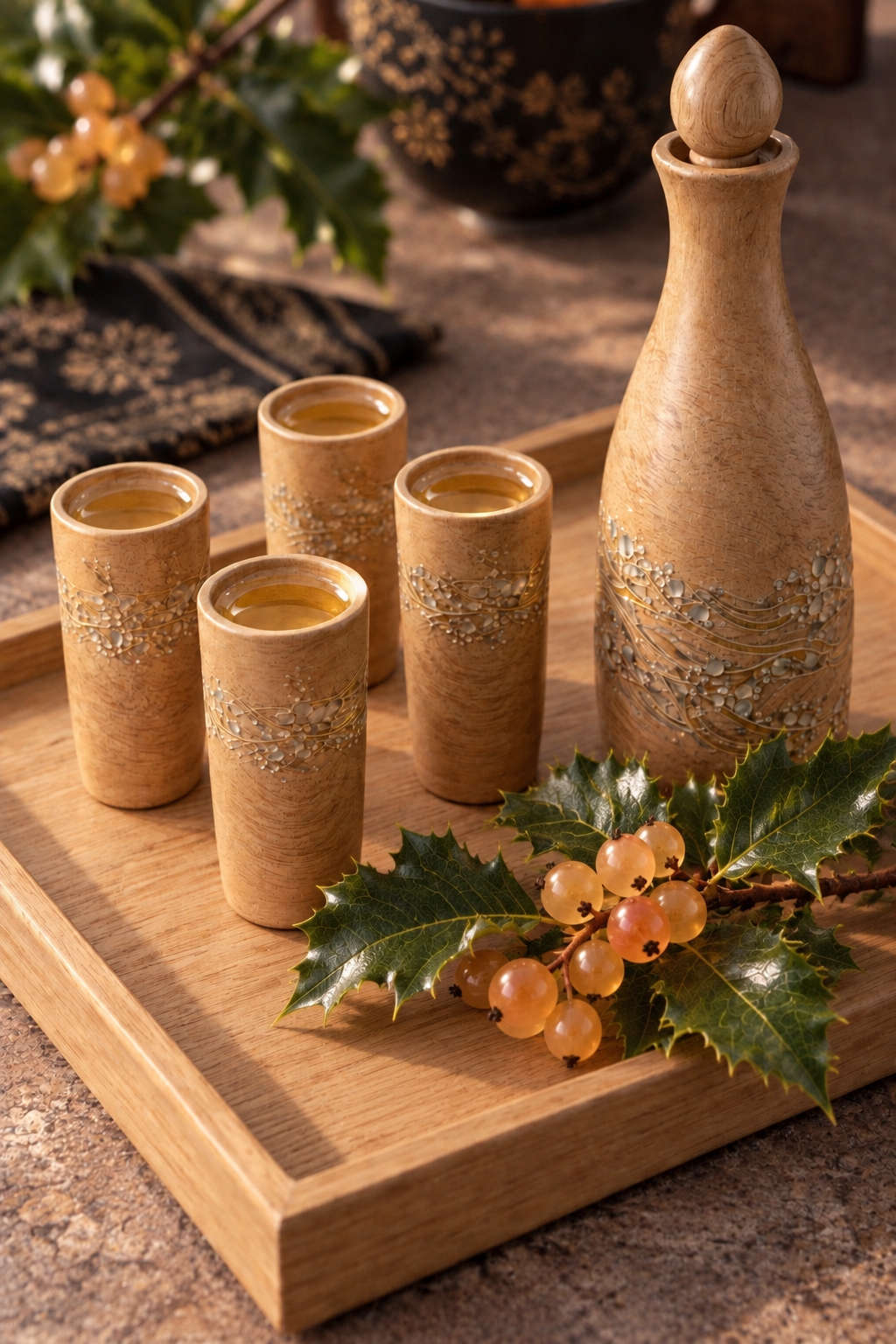
Salenar, also called sunwine in English, is a fermented beverage from the juice of the sunbead (ţiyar, Thiyara aurelinae), an orchard fruit native to Canassar. The drink takes its common name by metonymy from Salenar, the principal city of Maruen, where ţiyar groves, cellars, and export inspection are concentrated. Geographic-indication rules reserve certain premium grades for registered Maruen sites, though licensed cellars operate island-wide.
At 6–9% alcohol by volume, salenar is a light, translucent amber liqueur with mild natural sparkle, a honey-pear-apricot aroma, and a calming, mildly euphoric effect. It is a ceremonial and social drink associated with warmth, composure, and shared light, occupying a niche closer to wine than to distilled spirits.
Related articles: cuisine; Maruen; hilmi.
Description and production
Salenar is typically served chilled in small ceramic, crystal, or bamboo cups, often with a single fresh ţiyar berry. The flavour combines honeyed sweetness with faint floral acidity and a slight vegetal note. Unlike stronger spirits, it is low in ethanol and rich in fruit-derived compounds that Canassarene drinkers describe as a "sun-drowsed" sensation rather than overt intoxication.
Traditional method is cold fermentation of freshly pressed ţiyar juice in sealed clay or glass vessels, using airborne yeasts of the river valleys. Fermentation is kept slow to preserve aroma and translucency. After clarification the drink is aged for several weeks, often with a little seyhindäl honey. Modern producers use controlled micro-fermentation to keep the same balance of sweetness and low alcohol.
Regional variants include amber salenar, aged in wood for a deeper colour and vanilla-like aroma; white salenar, lightly filtered and served at lunar festivals; and temple salenar, unsweetened, drunk by monks during meditative fasts. Bottled salenar is a staple solstice gift, often in etched glass or ceramic carafes bearing the sun motif of Ooronas.
Cultural role
Salenar is served at winter salons and garden receptions, at New Year vigils as a figure of the sun's return, and at poetry gatherings and temple feasts as an offering of serenity. Etiquette holds that one does not pour for oneself: a companion refills the cup, as a sign of shared warmth. Drinking rapidly or to excess is considered vulgar; graceful restraint is a mark of refinement. Poets often pair the drink with seyhindäl, treating the two as complementary figures of repose and clarity.
It is down-regulating rather than stimulatory. Seyhindäl teas and elixirs occupy the opposite register. Consumption clusters in domestic hospitality, licensed autumn festivals (especially Mälloc and Dovanya harvest events), and restaurant service.
Pharmacology
Canassarene food chemists and clinicians describe the drink's effects as a combination of low ethanol dose and fruit metabolites unique to ţiyar. A typical serving of about 60 ml at 6–9% ABV contains roughly 2.8–4.3 g of ethanol, about a quarter to a third of a standard alcoholic drink. Peak blood alcohol therefore remains very low, matching reports of calm and drowsiness rather than drunkenness.
Laboratories isolate, besides ethanol, thiyarin glycosides thought to yield thiyarol, a small lipophilic aglycone released in fermentation and gut metabolism, together with amber-hued polyphenols and sulfur-bearing acids that bind aldehydes and act as antioxidants. Ethanol and thiyarol are absorbed from the stomach and upper small intestine within 10–20 minutes, with peak plasma levels around 30–45 minutes; both are described as crossing into the brain.
At this dose, Canassarene clinical papers describe ethanol as producing mild facilitation of GABAA signalling and slight dampening of NMDA signalling: relaxation and a soft euphoria without stimulation. Thiyarol is proposed to deepen that calm by weakly enhancing the same inhibitory receptors and by partly inhibiting the ENT1 nucleoside transporter, raising extracellular adenosine in cortex and basal forebrain. The result is sleep pressure and a slower mental tempo—the "sunset drift" of ordinary speech. The pairing is reported as euphoria with quietude, not agitation. Cups stack additively but remain more soporific than disinhibiting at customary intake.
Onset is 10–20 minutes; peak effects 30–60 minutes; subjective calm about two to three hours. Drinkers often report being heavy-eyed but clear afterward. Canassarene accounts attribute the slight hangover to the fruit's polyphenols and sulfur compounds scavenging acetaldehyde. Customary intake is one to three small cups. Co-use with strong sedatives is discouraged in clinical advice, as is driving or precision work during the peak window. Escalation beyond custom produces ordinary alcohol effects; dependence risk at traditional servings is described as low.