Festivals
Overview
The traditional Canassarene year is paced by four seasonal festivals—Idarin (spring), Mälloc (summer), Dovanya (autumn), and Usca (winter)—each naming a distinct phase of how life should relate to time, work, and others, with Yundra as the short Wandering span that bridges the winter quarter to spring. Together they express a single idea: outward intensity and inward consolidation are both necessary, but neither should collapse into the other.
Idarin opens the cycle with measured awakening at home and at thresholds, refusing abrupt starts. Mälloc carries that preparation into shared, visible energy—public life, rhythm, and abundance—while still favoring structure over chaos. Dovanya turns the year inward again: what was produced is gathered, sorted, and accounted for, socially and materially, so that "what is gathered must be understood before it can be released." Usca then holds a long winter of quiet continuity—sustained inward focus, enclosed comfort, and work in maintenance and preparation modes rather than outward expansion—until the brief interstitial Yundra and the return of Idarin.
The festivals are less a calendar of parties than a cultural grammar for beginnings, peaks, reckoning, and rest.
Beyond those anchors, the same calendar formally layers Yundra at the year's seam, civic National Day and reflective Nima Tënin, and two light Gregorian-alignment festivals—New Year's Day and Labour Day—for international coordination. Roughly 12–15 institutionally closed or reduced-activity days typically appear across a year, depending on Yundra's leap length and how winter spans are handled; essential services stay open, with holiday staffing treated as continuity rather than exception. What follows develops each festival in turn; a compact chronological guide closes the article.
Idarin
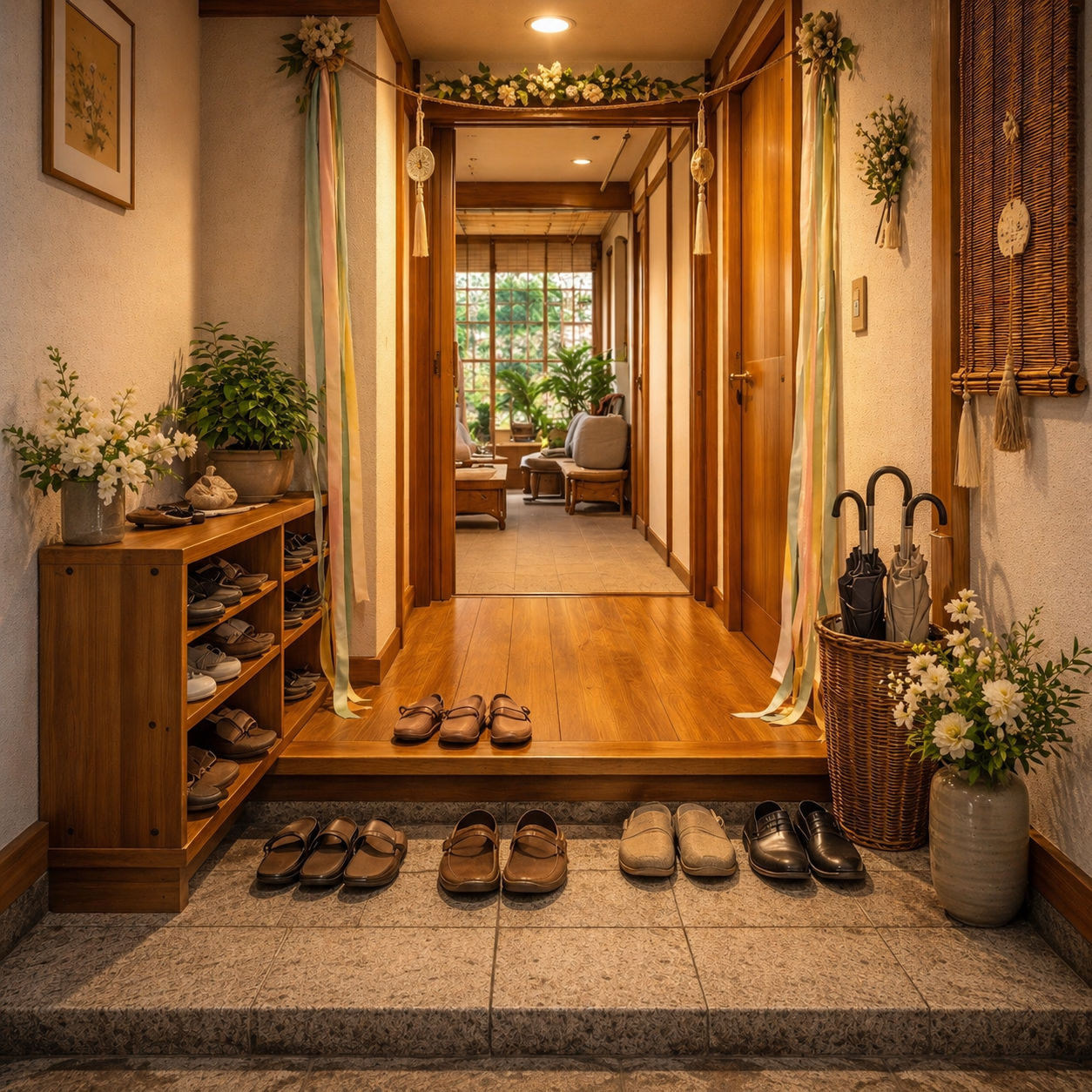
Idarin (Canassarene: Idarin) is the Spring/Beginning Festival of Canassar, observed on Month 1, Day 1 of the traditional Canassarene calendar, typically corresponding to 20–21 March in the Gregorian calendar. It marks the formal beginning of the Canassarene year and the transition from the interstitial period of Yundra into the structured annual cycle.
Idarin is associated with renewal, awakening, and measured activation, and is characterized by domestic preparation, threshold rituals, and a clean, structured re-alignment with outward life.
Background
The name Idarin is commonly interpreted as deriving from roots meaning "to wake," "to break open," or "to rouse from stillness." It is often translated as awakening or becoming active again. Importantly, the term does not imply abrupt or forceful beginnings. Instead, it reflects a cultural preference for controlled and deliberate initiation, in which activity resumes in ordered phases after a period of rest.
Idarin is fixed at the beginning of the Canassarene year on Month 1, Day 1, occurring near the vernal equinox. It follows Yundra, a short interstitial period associated with transition and release. As such, Idarin represents not only the start of a new year, but also a re-entry into structured time and activity.
Historically, Idarin marked the resumption of agricultural and social activity following winter. Early practices included preparing tools, inspecting stored goods, and reestablishing household routines. Over time, these practical actions developed into symbolic observances centered on readiness and clarity, while remaining grounded in everyday domestic life. Unlike state-centered festivals, Idarin has consistently retained a household-oriented character, with minimal emphasis on large-scale public ceremony.
Observances
In the days preceding Idarin, households undertake thorough cleaning and reorganization. This includes clearing accumulated dust, rearranging living spaces, and discarding unnecessary items. This activity is not framed as ritual purification, but rather as making the home ready for renewed use. The emphasis lies in restoring order and removing stagnation.
A defining gesture of Idarin is the opening of the front door at the start of the day. Historically, doors were opened fully, allowing free movement between households; in modern practice, doors may be opened symbolically while gates remain secured. The act signifies re-engagement with the outside world and marks the transition from inward winter life to outward social activity.
Decorations are used sparingly and are typically placed at transitional spaces such as doorways and windows. Common elements include vases of seyhindäl flowers valued for their light fragrance, hanging ribbons or cloth strips in muted spring tones, and small plant arrangements. Those arrangements favor soft color palettes, minimal ornamentation, and an emphasis on lightness rather than display.
Daily life and tone
Idarin encourages light, informal visitation among neighbors and relatives. These interactions are typically brief and unstructured, involving simple greetings and the exchange of small gifts or food items. Rather than large gatherings, the day is marked by distributed, light-touch social contact and a staged increase in activity across the day.
A widely observed contemporary custom is the consumption of Fillur—a çimën (broth or soup) marked by limpid clarity—on the morning of Idarin: light, thin-bodied, mild and often accented with fresh greens and citrus, taken as a symbolic first intake of the year. The practice is not historically mandated.
People commonly wear newly acquired or freshly prepared clothing during Idarin, favoring light fabrics, pastel or muted tones, and understated, comfortable styles. The emphasis is on freshness and subtle renewal, rather than formal or ceremonial display.
The atmosphere of Idarin is typically described as quiet at first and then opening into active, light, airy, and anticipatory movement, restrained rather than exuberant. Unlike more celebratory New Year festivals in other cultures, Idarin unfolds in measured stages, reflecting the natural transition from winter to spring.
Fillur
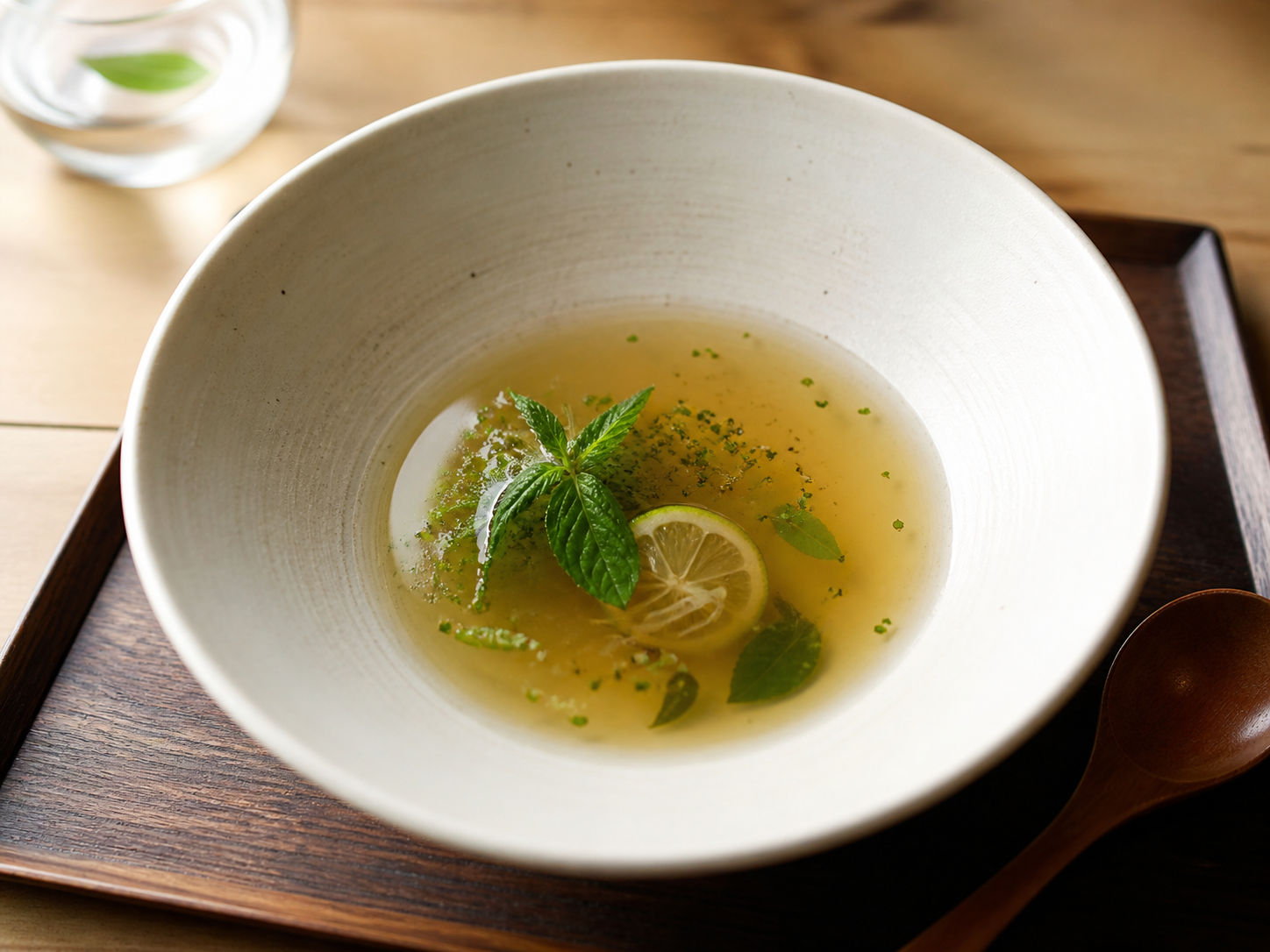
Fillur (Canassarene: fillur) is a çimën—a broth or soup in the general sense—traditionally consumed on the morning of Idarin in Canassar. It is widely regarded as a symbolic first intake of the year, standing for clarity, renewal, and a gentle reactivation of the body after the stillness of Usca and the interstitial period of Yundra. Although now commonly associated with Idarin, it is a modern cultural development, believed to have emerged in the late 20th century as part of evolving domestic interpretations of seasonal practice.
Çimën denotes broth and soup in general. Fillur is the name of this Idarin preparation. Learned tradition parses fillur as fil ("bright") and lur ("eye"): "eye-bright," evoking limpid transparency and a thin, unobstructed body—brightness you can see through the liquid.
Fillur is prepared as a clear, lightly flavored broth, emphasizing transparency and balance over richness: a clean liquid base, mild umami from simple stock or infusion, minimal oil or heavy seasoning, light texture, restrained flavor, and ease on waking. It is usually served warm, in small portions, and consumed attentively. While recipes vary by household, common elements include a clear base stock (often vegetable or light poultry), fresh greens such as mint or perilla, a small amount of citrus or another acidic note for brightness, and light seasoning (typically salt or mild aromatics). The intended profile is fresh, slightly aromatic, and gently invigorating rather than complex or filling.
Preparation is simple and avoids elaborate technique: simmer a light stock, briefly infuse herbs or greens, add citrus shortly before serving. The broth is not heavily reduced or thickened, and ingredients are used sparingly to preserve clarity. Most households prepare it on the morning of Idarin, though some prepare components in advance. It is taken in the early morning as the first food or drink of the day, without formal requirement, and participation varies between those who favor the taste and those who emphasize symbolism. Drinking it is generally quiet and unceremonious, matching Idarin as a period of clean, sequenced activation rather than sudden celebration.
The dish functions as a symbolic reset of intake, marking the transition from Usca and Yundra into Idarin. Clarity in the liquid suggests mental and environmental readiness; lightness, a gentle reintroduction of nourishment; its timing, the first act of consumption in the new cycle. It is often taken to embody the idea that beginnings should be clean, measured, and unburdened. Unlike many traditional seasonal foods, Fillur is widely regarded as a recent innovation that gained ground in urban households in the late 20th century through changing dietary habits, increased attention to health and digestion, and reinterpretation of seasonal ritual in modern contexts. Despite that origin, it has become a widely recognized element of Idarin observance, especially in middle-class and urban settings. Variations may swap herb combinations, citrus elements, or coastal seafood-based stocks while preserving a light, clear, beginning-oriented identity.
Cultural significance
Idarin represents the phase of intentional beginning within the Canassarene seasonal cycle. It establishes the tone for the year by emphasizing that activity should resume with clarity and preparation rather than urgency.
In contrast to the stillness of Usca and the release of Yundra, Idarin affirms that beginnings are most effective when they are deliberate.
The festival thus serves both as a calendrical marker and as a cultural model for how new cycles of effort and activity should be approached.
Mälloc
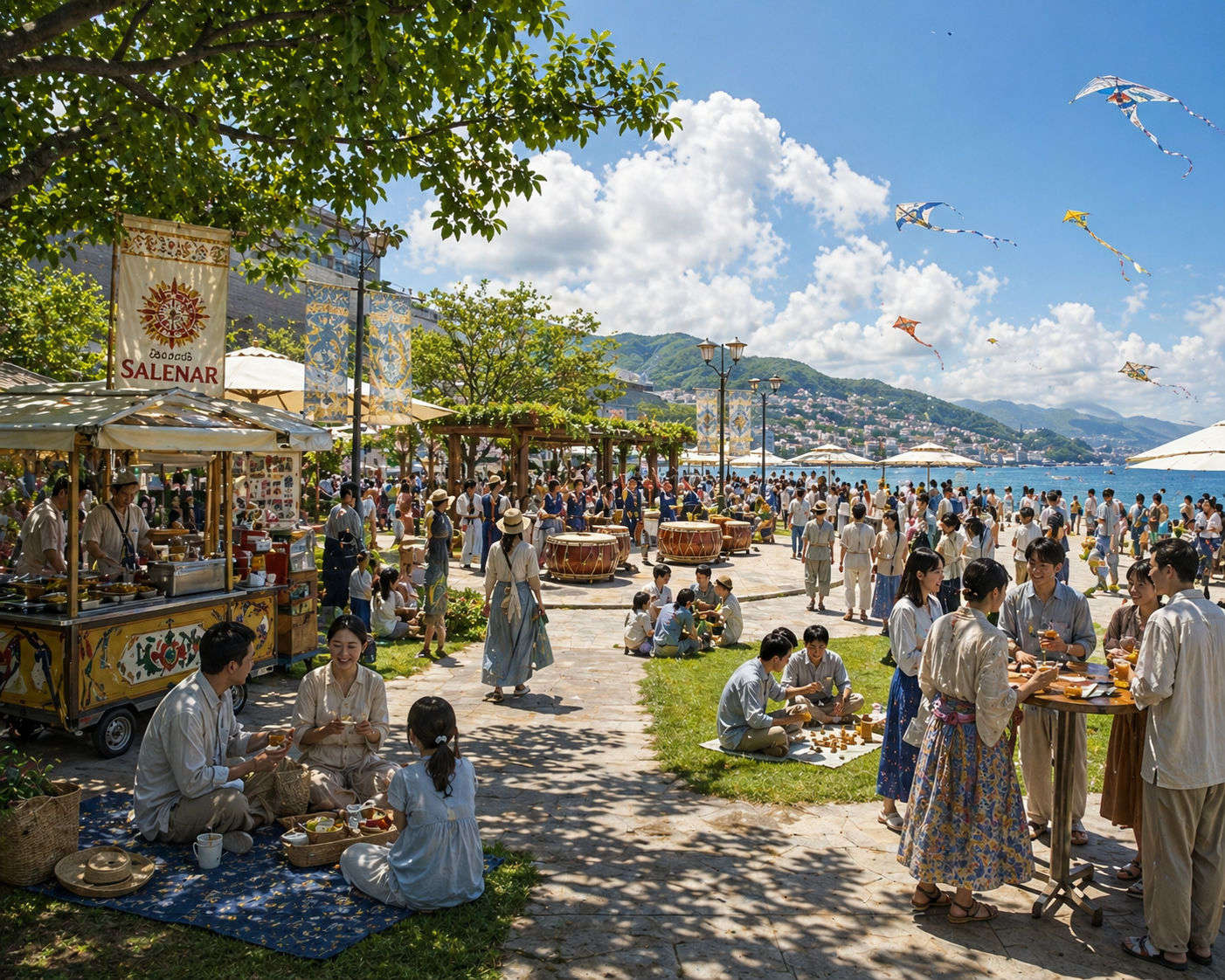
Mälloc (Canassarene: Mälloc) is the Summer/Heat Festival of Canassar, observed on Month 4, Day 1 of the traditional Canassarene calendar (typically corresponding to late June in the Gregorian calendar). It marks the transition into the most active phase of the year and represents the period of maximum outward energy, social expression, and communal activity.
Mälloc is characterized by public gatherings, performances, games, and elevated social interaction, and stands in contrast to the restraint of Idarin and the inward focus of later seasons.
Background
The term Mälloc is generally understood to derive from roots associated with heat, brightness, or intensity, combined with a suffix indicating a sustained condition. It is often interpreted as "the state of fullness under heat" or, more loosely, "when energy is at its peak." The name reflects both the climatic conditions of the season and the cultural expectation of heightened activity.
Mälloc occurs at the beginning of the summer phase on Month 4, Day 1, following the spring season of Idarin. It initiates a three-month period during which social, economic, and cultural life reach their highest levels of intensity. Within the Canassarene annual cycle, Mälloc represents the phase of expansion and expression.
Historically, Mälloc coincided with periods of strong agricultural growth, maritime activity, and, in some eras, organized conflict. While warfare was not exclusive to the season, favorable weather conditions made it a common period for military campaigns and large-scale mobilization. Over time, these associations were transformed into symbolic and recreational forms, including competitive games, physical contests, and public performance. In modern Canassar, Mälloc retains its energetic character, but its expressions are primarily social and cultural rather than martial.
Observances
Mälloc is strongly associated with outdoor communal life. Public spaces such as parks, beaches, and plazas become focal points for activity throughout the day. Common activities include group games and informal competitions, kite flying and recreational sports, and open-air markets and food stalls. Participation is typically fluid, with individuals and families moving between activities rather than adhering to a fixed program.
A defining feature of Mälloc is the prevalence of public performances, particularly those involving rhythm and coordinated movement. These may include large-scale drum ensembles, often centred on the tuma-tön, producing deep, resonant rhythms, choreographed dance performances, and traveling street performers and musicians. Unlike the subdued soundscape of other seasons, Mälloc is marked by controlled loudness and rhythmic intensity. Performers are often supported by small contributions from spectators, reinforcing the participatory nature of the festival.
Alongside physical and performative activities, Mälloc also accommodates more intellectual forms of expression. In monasteries and cultural institutions, extended recitations are held, often delivered entirely from memory. Those events may last for extended periods, allow audiences to enter and leave freely, and draw attendees interested in literature, philosophy, or displays of memory. Such practices reflect the Canassarene cultural value placed on retention, recall, and disciplined learning, even during periods of outward activity.
Daily life and tone
Food during Mälloc is abundant, varied, and often consumed outdoors, with street food and portable dishes, grilled or lightly prepared items, and refreshments suited to warm weather. In the evening, the consumption of salenar—a fermented beverage whose name is the toponym of a Maruen dëmir, often glossed in English as sunwine—becomes common. Drinking is generally moderate and social, contributing to a relaxed but lively atmosphere.
Mälloc extends into the evening, when temperatures become more comfortable and public activity continues. Nighttime features may include fireworks and firecrackers, illuminated performances, and late-night markets and gatherings. These activities reinforce the sense that the day's energy is sustained rather than abruptly concluded.
The atmosphere of Mälloc is typically described as vibrant and active, socially open, and rhythmically intense. While more energetic than other Canassarene festivals, Mälloc remains structured rather than chaotic, with an emphasis on coordinated activity and shared participation rather than unrestrained expression.
Mälloc kite
The Mälloc kite (Canassarene: mälloc laiyin; literally "summer kite," mälloc + laiyin) is a traditional bird-shaped kite flown during Mälloc in Canassar. It has a broad, gliding wing profile, a central spine that extends into a long stabilizing tail, and a surface covered with flowing, non-geometric motifs. It is among the most recognizable objects of the summer season and is taken to stand for lift, expression, and controlled intensity.
The kite is built around a bird-like silhouette: a wide, gently curved wingspan, a tapered body running down into a long tail, and a small stylized head or crest atop the spine. The tail combines a primary structural extension with trailing ribbons or streamers so the craft stays stable in glide while still showing subtle, wind-driven motion. Unlike rigid geometric kites, the Mälloc kite is meant to ride air currents rather than fight them. Traditional builds use thin bamboo or wood for the frame, paper, silk, or woven fiber for the sail, and natural dyes or pigments for color; lateral spars branch from a central spine, with slight wing curvature for lift and maneuverability. Tail length and weight are tuned for balance under shifting wind.
Decoration matters as much as structure. Surfaces often carry flowing floral shapes, cloud-like forms, feather-inspired marks, and asymmetrical organic compositions, usually hand-painted, non-repetitive, and fitted to the kite's outline. The visual vocabulary stresses movement, continuity, and natural growth over strict symmetry.
During Mälloc, kite flying is a common communal pastime. The Mälloc kite works as both recreation and a symbolic register of seasonal energy; its rise is read as outward movement, expansion of effort, and shared occupation of open air. Flying is often collective, with families and neighbors launching, watching, and trimming kites for long stretches in parks and shorelines.
The design is traditionally traced to the tufal, a fast summer bird of Canassar noted for long gliding arcs, quick changes of direction, and easy use of thermals. Wing bend, tail length and flexibility, and wind responsiveness on the kite echo those traits, so the object is understood as an attempt to translate observed flight into crafted form rather than as mere ornament.
Mälloc kite fighting
Mälloc kite fighting is a competitive practice of the Mälloc season in which flyers maneuver kites to disrupt, destabilize, or outmaneuver opponents. It stresses control, line tension, angle to the wind, and position in shared airspace more than casual recreation and is treated as a disciplined extension of ordinary kite handling.
In a typical match, flyers may force rivals into unstable air, entangle or cut lines, or drive another kite down or out of position. Victory rules differ by region but often include remaining aloft after others lose control, forcing an opponent's kite to descend or crash, or severing the opponent's line. Contests usually take place in open communal space when wind is favorable. Common maneuvers include riding above an opponent to spoil their airflow, crossing lines to tangle or shear, and stalling and recovering to bait a misjudgment; success depends on continuous readjustment to gusts and to other kites in the sky.
Technique is again linked to the tufal: sudden lateral shifts while gliding forward, short drops with fast recovery, and holding height above other birds to steal favorable flow are abstracted into tactics such as controlled drop and re-lift, lateral moves without slack in the line, and keeping altitude over a rival. That habit of deriving technique from close observation of natural systems runs through much Canassarene craft and sport.
Kite fighting is generally seen as a display of skill rather than aggression, a test of control under shifting conditions, and part of Mälloc's expressive register. Informal norms favor fair engagement, respect for others' work on the kite, and limiting damage outside the bout, so the mood stays energetic and expressive but still bounded. In contemporary Canassar the activity remains popular, especially among young people and enthusiasts; synthetic sails, reinforced line, and formal tournaments appear alongside continued regard for older forms and methods.
Cultural significance
Mälloc represents the phase of maximum outward expression within the Canassarene seasonal cycle. It is the period in which effort, preparation, and social alignment achieved in earlier phases are actively realized.
The festival affirms that energy and activity are most meaningful when they are shared and visible.
At the same time, its position within the cycle ensures that this intensity is temporary, to be followed by the consolidation of Dovanya and the quieting of Usca.
Dovanya
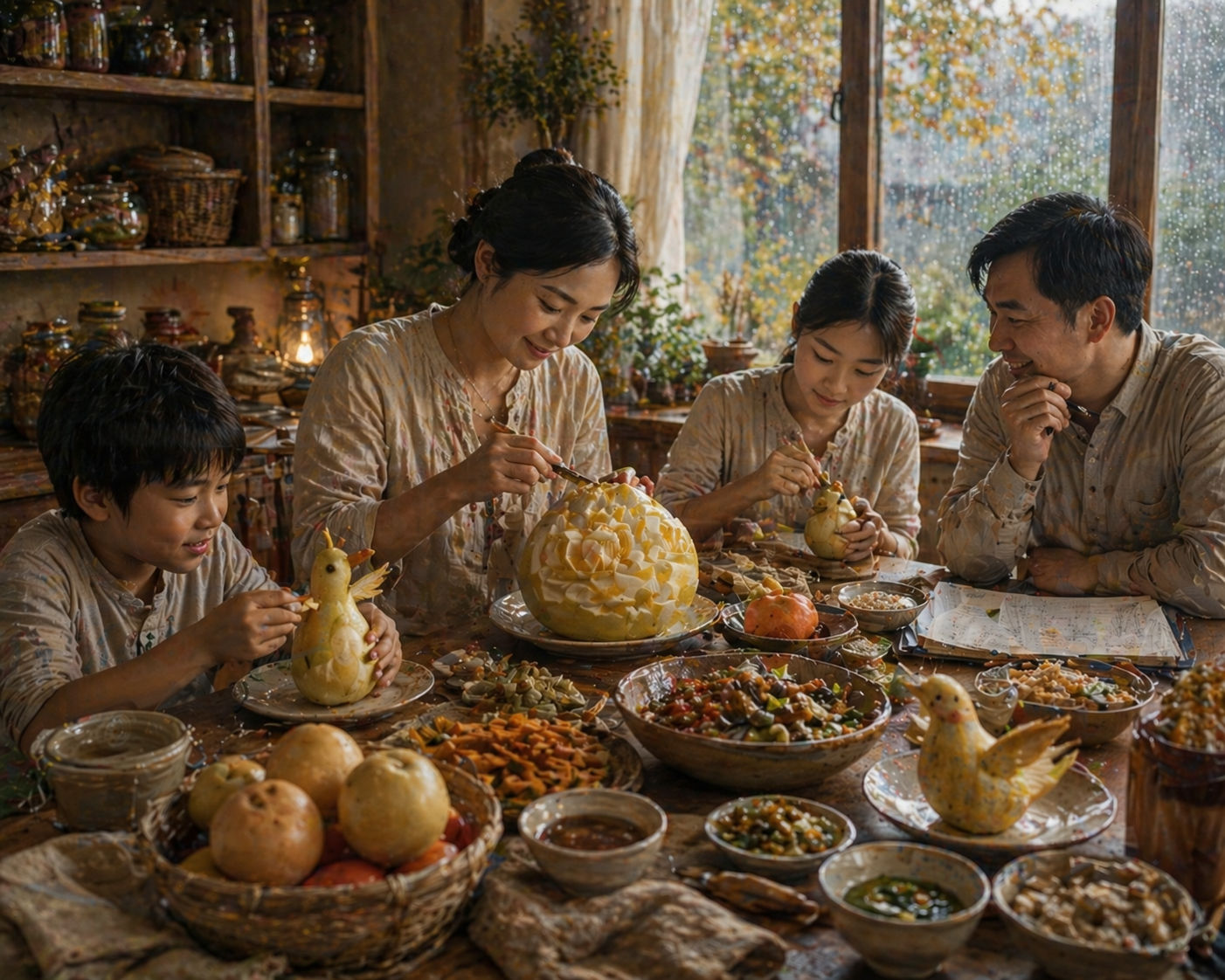
Dovanya (Canassarene: Dovanya) is the Autumn/Gathering Festival of Canassar, observed on Month 7, Day 1 of the traditional Canassarene calendar (typically corresponding to late September in the Gregorian calendar). It marks the period when the year's efforts begin to consolidate, and is associated with harvest completion, accounting, and inward social life.
Dovanya is characterized by domestic activity, material organization, and reflective assessment, forming a transition between the outward intensity of Mälloc and the eventual closure of the year in winter.
Background
The term Dovanya is generally understood to derive from roots meaning "to gather," "to draw inward," or "to bring together," combined with a suffix denoting completion or state. It is commonly interpreted as:
"The state of what has been gathered."
The name reflects both the physical collection of goods and the conceptual consolidation of effort over the course of the year.
Dovanya occurs approximately three months after Mälloc and precedes the Winter/Closing Festival by a similar interval. It occupies the third quarter of the Canassarene year, following the period of maximum activity and preceding final closure. Although often associated with the end of the agricultural cycle, Dovanya does not represent the end of the year itself. Instead, it marks the beginning of a structured transition toward completion, with significant time remaining before Yundra.
Historically, Dovanya coincided with the completion of harvests and the organization of surplus goods. Agricultural produce was collected and sorted, preserved or stored, and apportioned for trade, household use, and taxation. In many periods, a portion of gathered goods was rendered as tribute to regional authorities or the imperial court, typically in unprocessed form to preserve durability during transport. Evidence suggests that while most tribute goods were delivered intact, presentation practices developed closer to administrative or ceremonial centers, where perishability could be managed more effectively.
Observances
A central feature of Dovanya is the ordering and consolidation of possessions, including storage of food and household goods, sorting of tools, materials, and supplies, and preparation of preserved items for later use. These activities reflect a broader cultural emphasis on placing things in their proper state before the year's close.
Dovanya is strongly associated with financial and social accounting. Common practices include settling outstanding debts, reconciling shared expenses, and finalizing informal agreements. In both historical and modern contexts, this extends beyond monetary matters to include obligations, favors, and interpersonal balances. The aim is to reduce what is carried forward into the remainder of the year.
Unlike the outward-facing celebrations of Mälloc, Dovanya is primarily domestic in orientation. Gatherings are smaller and more familiar, visits are less frequent but longer in duration, and households become the primary setting for activity. This shift reflects a broader withdrawal inward, both socially and spatially.
Daily life and tone
Dovanya is associated with abundant but grounded cuisine, emphasizing freshly harvested ingredients, preserved foods opened for consumption, and dishes prepared with longer cooking times. Meals are typically shared within the household or close social circles, consumed at a deliberate pace, and structured and seated rather than mobile. Food is regarded not only as sustenance but as a representation of accumulated effort.
A distinctive element of Dovanya is the practice of Somaric Dira ("to reveal through carving"), a form of food preparation in which ingredients are cut, shaped, or arranged to reveal their inherent structure. Originally associated with ceremonial presentation in administrative or court settings, Somaric Dira has become a domestic practice observed during Dovanya. Its characteristics include minimal, deliberate cuts, an emphasis on structural clarity rather than ornamentation, and application across a range of foods, including fruits, fish, and prepared dishes. The practice ranges from simple arrangements to intricate carvings and informal, playful interpretations within the household. Somaric Dira reflects the broader themes of Dovanya—understanding, presenting, and accepting what has been gathered.
Dovanya typically coincides with a period of increased rainfall and cooling temperatures. Rainfall during the season is steady rather than intense, contributes to reduced outdoor activity, and reinforces the shift toward indoor, domestic life. The environmental conditions play a significant role in shaping the festival's introspective character.
The atmosphere of Dovanya is often described as calm but purposeful, inward-facing, and materially focused. It lacks the quiet initiation of Idarin and the expressive intensity of Mälloc, instead occupying a middle ground of measured activity and reflection.
Somaric Dira
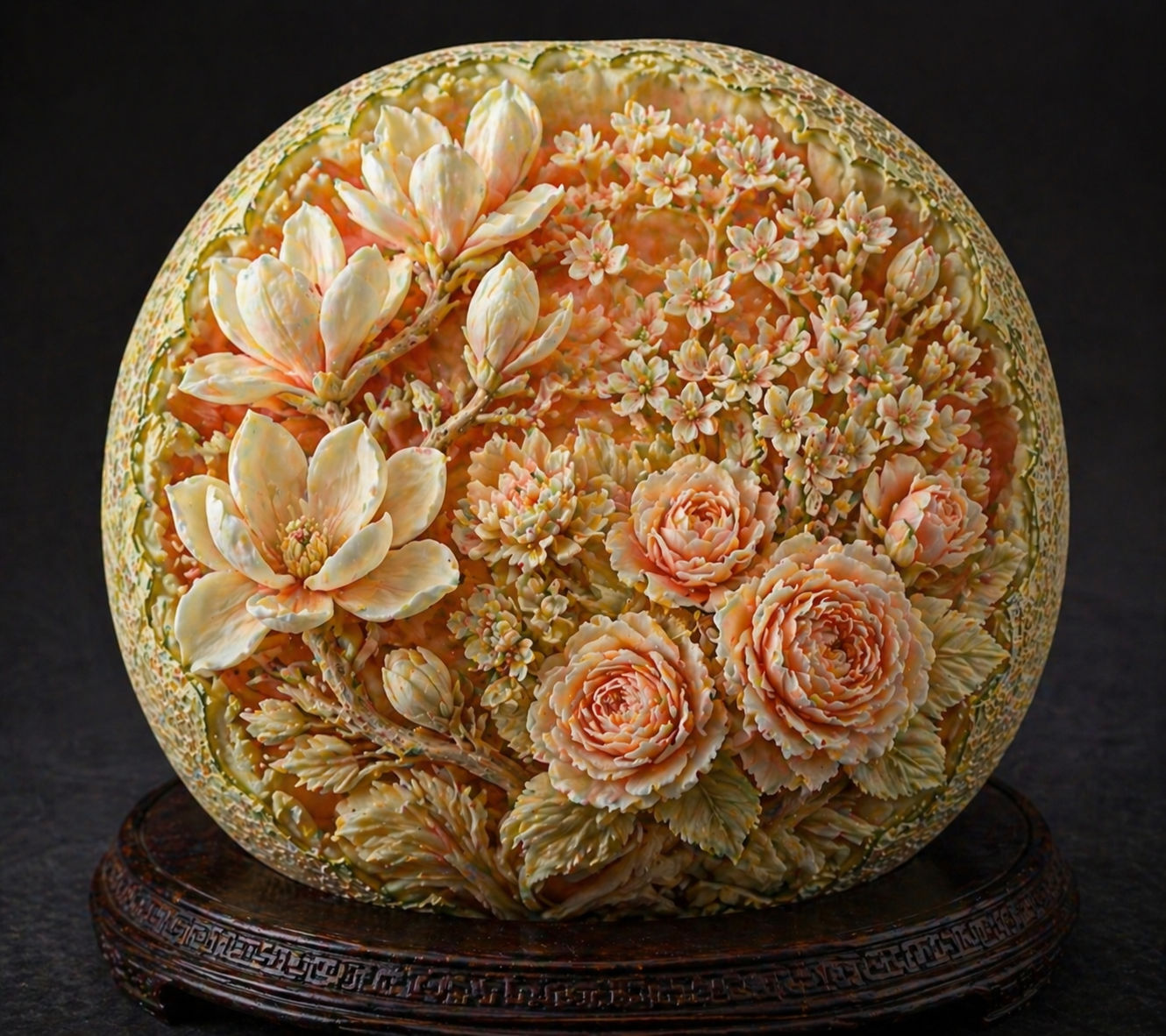
Somaric Dira refers to the tradition of decorative carving of seasonal fruits—most often melons, gourds, and root vegetables—into patterned or symbolic forms for display and shared consumption during Dovanya in Canassar. The same name also covers related restrained presentation of other foods at the festival, but fruit carving remains its most visible face. It is widely regarded as a hallmark of Dovanya's visual culture, standing for transformation, restraint, and the temporary nature of abundance.
The compound is parsed as somaric ("to reveal," "to bring into view") and dira ("to carve," "to pick or chip away," "to chisel"); together it compresses reveal-through-carving—disclosing inner structure in what has been gathered, not merely ornamenting the surface.
Work is typically done in the days leading up to Dovanya. Carvers favor geometric patterns, floral or petal-like shapes, and layered symmetrical structures, stressing precision and balance over elaborate figuration. Surfaces are often incised rather than deeply cut so the fruit's natural color and texture stay legible. Pieces may appear in domestic settings, at shared meals, or in public or commercial spaces, but they are not treated as permanent sculpture.
Carved items are meant to be eaten, usually within a day or two, so the display is understood as deliberately temporary: carving briefly reframes the ingredient before it returns to ordinary use. That cycle of forming, display, and consumption parallels Dovanya as a season of completion and release.
In contemporary Canassar, urban outlets often sell pre-carved fruit—shrink-wrapped or boxed, standardized in design, and intended for gifts or communal meals. Handmade carving persists in many households, especially in rural regions, and commercially prepared work carries no stigma; the point is participation in the seasonal rhythm, not sole authorship of each piece.
Somaric Dira is not isolated as a fine art but as a situational practice tied to Dovanya. It encodes completion (shaping what has already been gathered), restraint (avoiding excessive elaboration), and ephemerality (accepting that the object will not endure). Unlike preservation aimed at stretching the harvest, it acknowledges abundance while letting it pass, and so materializes the idea of finishing well rather than preserving indefinitely. It remains a widely recognized, quietly observed strand of Canassar's autumn cycle.
Cultural significance
Dovanya represents the phase of consolidation after expansion, assessment after action, and preparation before closure. It functions as a cultural mechanism for reducing excess, clarifying obligations, and aligning material and social states.
In the broader Canassarene worldview, Dovanya affirms that "what is gathered must be understood before it can be released."
Usca
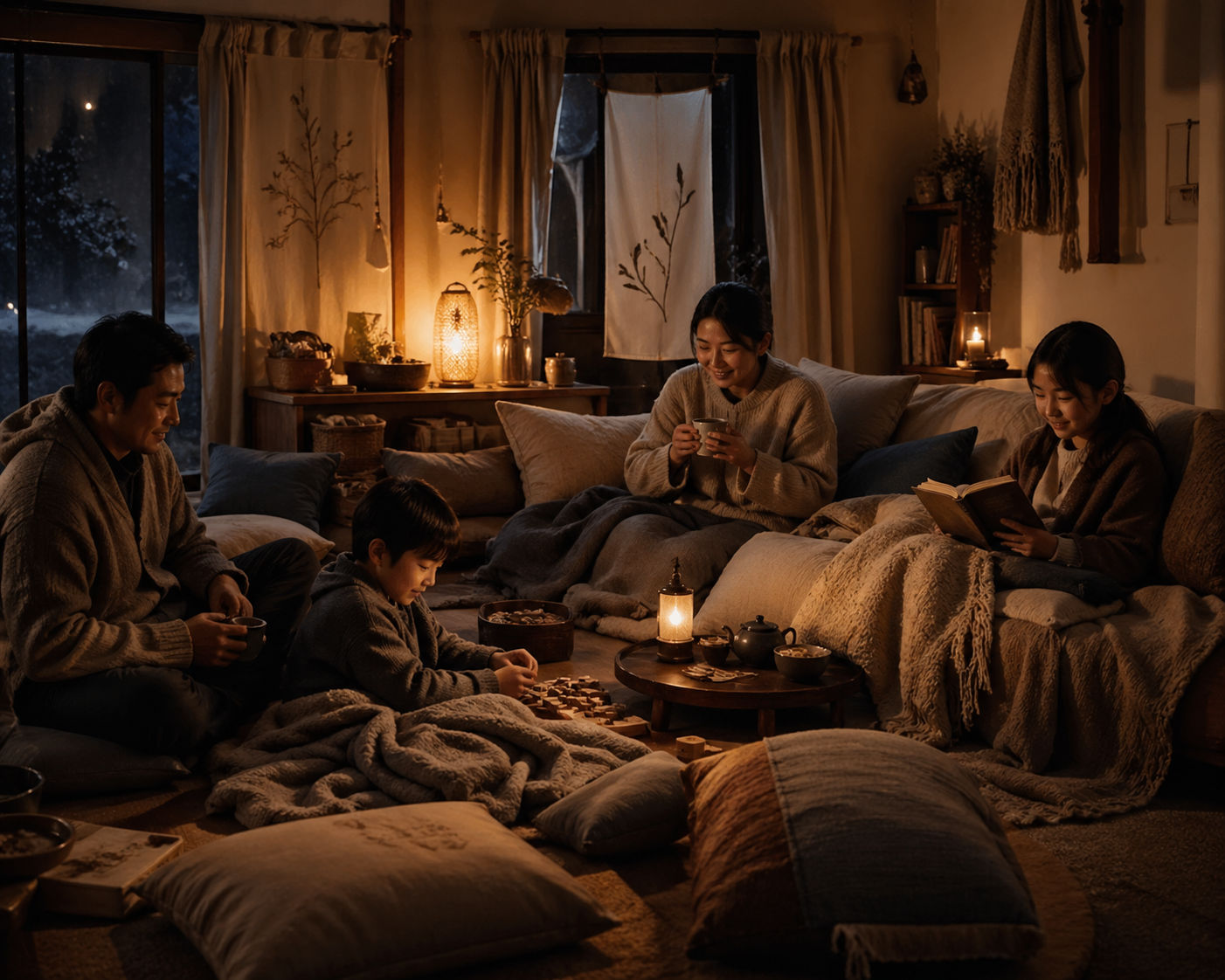
Usca (Canassarene: Usca) is the Winter/Resting Season of Canassar, encompassing Months 10–12 of the traditional Canassarene calendar (typically corresponding to December through February in the Gregorian calendar). It represents the phase of the year characterized by reduced outward reach, indoor life, and sustained inward work—maintenance, preparation, audit, and depth tasks carried at a steady, non-expansionist tempo.
Usca follows Dovanya and precedes the interstitial period of Yundra, forming the final stage of the annual cycle before renewal.
Background
The term Usca is generally understood to derive from roots associated with stillness, quieting, or dimming, combined with a suffix denoting a sustained state. It is commonly interpreted as:
"The state of quieted continuity."
Unlike terms implying inactivity or sleep, Usca denotes a condition of ongoing life at an inward, maintenance-oriented tempo rather than cessation.
Usca occupies the final three months of the Canassarene year: Month 10 (approximately December), Month 11 (approximately January), and Month 12 (approximately February). It concludes immediately before Yundra, a short, non-seasonal period dedicated to transition and release. While Usca is sometimes informally associated with the "end" of the year, it is more accurately understood as a tapering phase, during which outward intensity yields to inward consolidation while core routines and continuity work persist.
Usca corresponds to Canassar's coldest period, marked by low temperatures, shortened daylight hours, and increased indoor habitation. Windows and external openings are typically kept sealed, and households adjust their interiors to retain warmth. Environmental conditions reinforce the season's inward orientation, though they do not eliminate activity.
Observances
Work does not cease during Usca; rather, it redistributes toward maintenance, repair, audit, and preparatory depth. Common activities include administrative and clerical work, repair and upkeep of tools and materials, small-scale production, and planning and preliminary thinking for the upcoming year. In both historical and modern contexts, Usca is characterized by:
Continuation without expansion.
Wide outward launches and novel campaigns are typically sequenced for Idarin; during Usca, effort is structured so that systems, records, and households reach the alignment window in a prepared state.
A defining feature of Usca is the seasonal adaptation of interior spaces, sometimes informally described as "softening the house." This includes the introduction of heavier textiles such as blankets and layered fabrics, the use of thicker curtains and interior hangings, reduction of lighting intensity, and arrangement of furnishings for comfort and enclosure. Rather than decorative display, these changes represent functional and sensory adjustment to the season.
Entryways often feature secondary fabric barriers or hangings, creating a soft transition zone between the sealed exterior and the interior living space.
Usca is associated with a set of informal behavioral norms sometimes described as rituals of measured pace. These include holding work in stable, reviewable states rather than forcing premature closure, batching non-critical decisions for the alignment window, and maintaining routines without opportunistic churn. Such practices are not codified but are widely recognized as appropriate to the season. They collectively express the principle that completion is staged across the cycle rather than compressed into a single outward tempo.
Daily life and tone
Usca cuisine emphasizes simplicity and warmth, contrasting with the abundance of Dovanya. Typical characteristics include the use of preserved and stored foods, reheating of previously prepared dishes, slow-cooked low-maintenance meals, and reduced emphasis on presentation. The practice of Somaric Dira (food presentation through carving) is largely absent during Usca, reflecting the season's reduced focus on display. Meals are modest, repetitive, and centered on sustenance rather than ceremony.
Commercial activity continues during Usca but adopts a subdued and supportive character. Common patterns include the purchase of comfort-oriented goods such as textiles, tea, and lighting; reduced volume of discretionary spending; and minimal seasonal promotion or advertising. Retail environments may reflect the season through softer lighting, quieter atmospheres, and reduced operational intensity. Consumption during Usca is generally intentional and low-frequency, aligning with the season's emphasis on sufficiency.
Social life contracts during Usca: interactions are largely confined to family and close acquaintances, gatherings are smaller and less frequent, and visits tend to be longer and more informal. Public events are limited, and large-scale celebrations are absent. The season encourages stable, familiar social environments over broad interaction.
The atmosphere of Usca is typically described as enclosed, warm, subdued, and continuous. It lacks the activation of Idarin, the outward energy of Mälloc, and the structured consolidation of Dovanya. Instead, it provides a period of stability without escalation, in which daily life persists in a softened form.
Material culture
During Usca, domestic space is reconfigured to support extended periods of indoor living. This is most visibly expressed through layered textiles and soft furnishings, which form a central component of the season's material culture. Households typically introduce or rearrange layered blankets of varying thickness, shawls and wraps for indoor use, cushion covers and floor mats, and heavier curtains and doorway hangings. These items are not regarded as luxury goods but as seasonal necessities that adjust the home to colder, quieter conditions. The practice emphasizes moderation and adaptability, with multiple lighter layers preferred over a single heavy covering.
Commercial environments reflect this shift. Retail spaces, particularly shopping malls, adapt their presentation during Usca by featuring textiles, subdued lighting, and enclosed displays designed to evoke interior comfort. Rather than promoting novelty or excess, seasonal merchandising focuses on supporting sustained, inward domestic life. Related goods—warm lighting, tea sets, and small-scale hobby materials—are often presented alongside textiles, reinforcing a broader cultural emphasis on rhythmic, skill-deep indoor activity.
Overall, the material culture of Usca reflects Canassarene values of restraint and continuity, prioritizing comfort, durability, and environmental attunement over display or ornamentation.
Cultural significance
Usca represents the stage of sustained existence following consolidation, deliberate pacing of closure, and preparation for release without forcing every account to settle at once.
Within the broader Canassarene worldview, Usca affirms that life may continue meaningfully through maintenance, preparation, and inward discipline even when outward milestones are held for the next phase.
It functions as a cultural counterbalance to periods of intensity, ensuring that the annual cycle includes space for recovery, reflection, and quiet persistence.
Yundra
Yundra (Canassarene: Yundra) is the late-winter span between the close of Usca and the first threshold of Idarin: five days in a standard year, six in a leap year. Registers and almanacs key it as month 0 beside the twelve seasonal months; festival speech calls it Yundra, the Wandering span, a footbridge of days rather than a fifth season.
The numeral sodan names the empty tally in ledgers and classrooms; the span itself goes by Yundra in festival speech. Schoolroom grammar unpacks the name as ayun dran—mist and the small footbridges coastal walkers throw across a winter creek—smoothed by generations of hurried speech into the single word Yundra.
Background
Civil offices and almanacs record the span as follows:
- Month 0 in civil notation
- five days in standard years
- six days in leap years
All solar correction required to align the calendar with the astronomical year is contained within this span. The remaining twelve months are fixed at thirty days each, producing a stable structure of 360 days plus the Yundra interval. The days are fully counted in timekeeping and accounting, yet they sit slightly aside from the seasonal grammar of Idarin, Mälloc, Dovanya, and Usca, marking the seam where one year lets go and the next has not yet tightened its grip.
Yundra is closely associated with Ohr in liturgical language, where the undivided absolute is invoked as a gentle lintel: a single breath held between two verses. The twelve months answer to the Dyad and Trinity in cyclical stories; Yundra answers to the domestic habit of leaving a lamp on the sill so someone coming home late still sees warmth.
Observances
During Yundra, regular schedules enter a short reset cadence. Essential work continues, yet many offices and guilds treat the span as a sanctioned seam: some documents await the Idarin ledger stroke, shop shutters follow a later opening pattern customary to the interval, and meetings often open with tea as a shared pause before tallies resume. Households widen the margin around errands, route heavy reckonings toward Dovanya's straight-line accounting, and treat visible in-progress mending as part of the reset grammar rather than as neglect.
The culture isolates a bounded pause before Dovanya's straight-line reckoning: the emphasis rests on conscious release of tempo, on letting attention walk a problem to its next bend without demanding a summit in the interstice.
Time loosens from fixed anchors by design. People sleep odd hours, visit without calling ahead, and trade long stories on short walks. The calendar offers fewer fixed anchors on purpose, so the body remembers that rhythm can return without being forced.
Daily life and tone
Social life stays small and kind. Headline processions belong to other seasons; neighbors borrow tools with lingering conversation, children run between courtyards, and older relatives receive visitors who sit a while without an agenda. The mood is quiet curiosity rather than display: the year is still choosing its shoes.
Yundra sits between the sustained inward work of Usca and the first clean ledger stroke of Idarin: it marks a true pause—attention may move across open threads without premature closure—and keeps the door unlatched until the household is ready to count aloud again.
Cultural significance
Yundra gives the year a civil bridge. The cycle may reset with threads coiled for later tightening; continuity can rest in loose coils and still hold.
By isolating solar correction inside this short span, the calendar keeps each thirty-day month mathematically tidy while letting human life admit calibrated slack where slack aids alignment.
In the wider imagination, Yundra names the span where one story trails off and another finds its opening sentence: mist on the path, a hand on a rail, a household agreeing that the formal tally resumes when Idarin broth steams.
Nima Tënin
Nima Tënin (Canassarene: nima tënin; commonly translated as Reconciliation Day) is a national festival in Canassar, observed annually in late autumn during Dovanya. Established in 1998, it is dedicated to remembrance, historical accountability, and acknowledgment of cultural suppression in the country's past, particularly of the Armassin people. It is among the most solemn entries on the public calendar and is often set against more outward-facing holidays such as National Day.
Background
The name joins nima ("public designation": what a person, office, deed, or episode is called in speech and in the archive) with tënin ("justice," "rectification," "correction": the alignment of those designations with fact, statute, and precedent). Together they read as a compressed pledge to hold the civil record straight.
Origins lie in a late-20th-century reassessment of Canassar's historical unification. While older national stories stressed political stability and cultural continuity, renewed academic and governmental attention in the 1990s focused on suppression of Armassin culture during the last phase of unification (c. 900–1100 CE), including forced relocation of populations, reorganization of religious and cultural institutions, and assimilation policies that diminished regional identity. In 1996 the Canassarene government formally acknowledged this history as a matter of national concern, and in 1998 Nima Tënin was instituted as an official public holiday. It was conceived as a civil day for remembrance and for bringing public names and tallies into line with what is known of the past.
Observances
Nima Tënin is marked by a nationwide shift toward quiet reflection: public life continues in a reduced, subdued register, without celebratory programming. A brief, coordinated moment of silence is observed at a designated time; participation is informal but widely practiced in workplaces, schools, and public spaces. Museums, universities, and public institutions foreground historical records and research, curated exhibitions on regional histories, and documentation of cultural suppression and integration, with emphasis on factual presentation rather than dramatization. Elements of Armassin language, art, and ritual may appear in restrained formats, presented as preservation and visibility rather than as staged performance. Many individuals and families keep the day privately—through reading, visits to memorial sites, or a quieter routine—and there are no prescribed domestic rituals.
Daily life and tone
Although the holiday was first centered on the Armassin historical experience, contemporary interpretation has gradually widened. The day is also understood as a reflection on the processes of unification and integration that shaped the nation, including assimilation of the Maruen, incorporation of Vërunar maritime regions, and the semi-autonomous position of Hälvarinco; these topics are not treated as equivalent to the Armassin case, which remains central because documentation is comparatively clear and recent. The evolution of the observance is therefore characterized less by redefinition than by deepening contextual awareness.
Public demeanor tends to avoid theatrical grief or mass ceremony; the prevailing tone is restraint, quiet seriousness, and steady attention to the record. Everyday references are minimal and matter-of-fact (for example, "It's Nima Tënin today"), reflecting a cultural preference against performative display of sentiment.
Cultural significance
Among nationally recognized festivals, Nima Tënin sits beside the seasonal grammar—renewal (Idarin), expression (Mälloc), completion and abundance (Dovanya), rest and interiority (Usca)—but its specific charge is historical accountability and the ethical continuity of the state. It is widely regarded as a necessary counterpart to National Day, tempering affirmative expressions of modern identity with structured remembrance.
Compared with reconciliation days in other countries that imply a finished process, Nima Tënin is framed as ongoing tënin within a functioning system: each year another pass at the same ledger, without a declared endpoint. That stance aligns with broader Canassarene values that favor continuity, balance, and measured correction of the public record.
National Day (Canassar)
National Day (formerly National Concord Day) is a national festival in Canassar, observed annually on 7 April. It commemorates the ratification of the modern constitutional order in 1950 and the formal transition of Canassar into a contemporary, unified state. It is among the most prominent civic observances in the country, built around structured public display—military parades, coordinated civic columns, and orderly symbolism—and is taken to express the outward face of the nation's modern identity.
Background
The holiday was first instituted as National Concord Day, stressing political alignment and institutional unity after post-war restructuring. After Nima Tënin was introduced in 1998 and historical narratives were reassessed, the name was gradually shortened to National Day, signaling a more neutral label and avoiding the suggestion that historical questions were fully closed or uniform.
In the aftermath of the Second World War, Canassar pursued deliberate political modernization: sovereignty had been continuous through the early 20th century, but governing forms still reflected older monarchical habits. On 7 April 1950 the Canassarene Constitutional Charter was ratified, instituting a constitutional and ceremonial monarchy, an elected Prime Minister as head of government, a modern administrative and ministerial apparatus, and the integration of traditional institutions—including the Twin Aspect system—into a contemporary framework. That act is treated as the start of Canassar's present state structure.
Observances
National Day unfolds as coordinated public programming across the country, foregrounding institutions rather than the domestic or informal rhythms of the seasonal festivals. The centerpiece is a large military parade in the capital, Hällarim, stressing precision, disciplined timing, and standardized formations; the display is read as evidence of organizational coherence and control, not as a threat of aggression. The same route typically includes marching bands, student contingents, civil service representatives, and regional delegations from the five historical regions, all rehearsed so the spectacle reads as collective alignment rather than spontaneous festivity.
The national flag, with its stylized six-petaled seyhindäl emblem, appears widely on public buildings and private homes, usually with restrained, orderly placement that values condition and protocol over sheer volume. Selected venues may add synchronized aerial segments, communication and logistics demonstrations, and other non-combat showcases of infrastructure—again framed as technical competence and coordination rather than as entertainment for its own sake.
Daily life and tone
Within Canassar's holiday system, National Day is loud and highly visible yet emotionally cooler than celebratory or intimate festivals: measured pride, observational participation, and some deliberate distance are the usual notes. Crowds tend to watch, comment, and acknowledge rather than to emote collectively; spontaneous mass outbursts are uncommon. In everyday talk the day is treated as important but somewhat routine—a chance to see national coordination and to rehearse confidence in the modern structure—more than as a site of intense private feeling.
Cultural significance
National Day stands as the main civic complement to the seasonal cycle: where Idarin, Mälloc, Dovanya, and Usca organize renewal, social expression, completion and abundance, and interior rest, National Day articulates the formal, institutional side of national identity. It is routinely paired with Nima Tënin, which supplies the reflective, historically accountable counterweight.
The observance marks not a single rupture such as independence or revolution but a deliberate transformation—the formalization of a system meant to preserve continuity, balance, and governance under modern conditions. That reading fits a wider cultural preference for stability, structure, and measured progression over drama or perpetual crisis.
Year at a glance
Rough chronological order in the Gregorian year, with Canassarene months where a festival is tied to the traditional calendar (full discussion in the sections above):
- New Year's Day (1 January) — alignment festival; modest weight beside Idarin as the cultural new year.
- Yundra (Month 0; five or six days, late February–early March in typical alignment) — Wandering span between Usca and Idarin.
- Idarin (Month 1, Day 1; near the March equinox) — spring festival opening the structured year.
- National Day (7 April) — civic festival of the 1950 charter.
- Labour Day (1 May) — alignment festival; low-key.
- Mälloc (Month 4, Day 1; ~late June) — summer festival.
- Dovanya (Month 7, Day 1; ~late September) — autumn festival.
- Nima Tënin (late autumn, within the Dovanya period) — reflective festival.
- Usca (Months 10–12) — winter quarter of inward continuity and maintenance-heavy work (a season, not a single civil date).
Institutional closure clusters in late winter through Yundra and Usca; spring and summer add punctual festivals, then autumn concentrates harvest display and remembrance before the cycle thins again into winter.