Traditional clothing
Overview
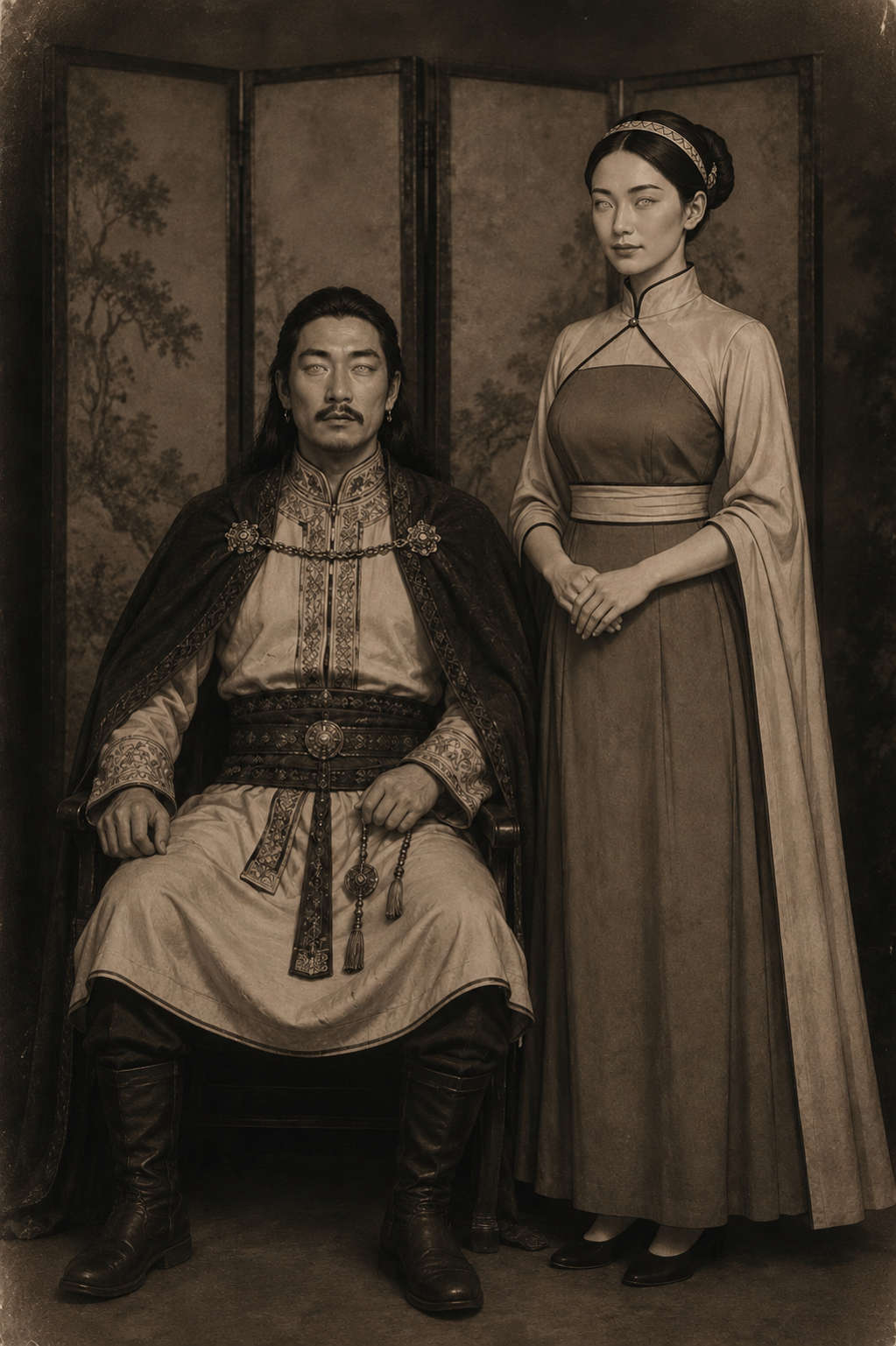
Traditional Canassarene clothing comprises the historical dress of Canassar and its regions. Textile, construction, ornament, and climate adaptation differ across the island, but most traditions share a recognizable set of conventions: a contrast between masculine and feminine silhouettes, layered garments, prominent waist dress, and ornament along structurally important edges.
The five traditions treated as the major regional styles are those of Cënasa, Maruen, Vërunar, Armassin, and Hälvarinco. Similarities reflect political integration, trade, and exchange, especially with the Cënasa heartland. Differences developed with climate, local economies, textile traditions, and differing degrees of foreign contact.
Men's traditional clothing generally emphasizes the upper body; women's clothing emphasizes the lower body. Both are usually substantially covered and layered. Men traditionally wear hair long, often loose or only partly bound, which increases the visual mass of the head and shoulders; cloaks, mantles, and other shoulder garments serve a similar purpose, tapering toward a comparatively narrow waist and legs. Knee- or thigh-length tunics with trousers are widespread. Women's hair is ordinarily gathered, braided, or arranged into compact buns. Long skirts, dresses, and layered lower garments expand below a closely defined waist. Women's outer garments typically fall vertically from the shoulders or stay closely fitted around them rather than widening the upper body. These are tendencies. Historical fashions have departed from them, but the upper-weighted masculine silhouette and lower-weighted feminine silhouette remain among the most persistent links among otherwise different regional styles.
Related articles: clothing; prehistoric dress.
General characteristics
Layering is widespread. A relatively simple underlying garment may be combined with a sash or belt, outer mantle or cloak, apron panel, decorative borders, and detachable accessories, so elaborate formal clothing does not always require complicated tailoring.
The waist is an important visual division. Broad textile sashes are common and may be woven, embroidered, wrapped, or fastened with metal clasps. Men's belts historically also held pouches, knives, tools, cords, and personal ornaments. Women's waist dress more often marks the transition from a restrained bodice to a more voluminous lower garment.
Textile decoration emphasizes edges and structural divisions. Collars, cuffs, hems, plackets, cloak borders, and waistbands may receive more ornament than the principal surface. Patterned linings are another form of decoration, especially where they show in movement. The result is a restrained overall form with highly worked details. Regional variation is substantial: wet southern coasts, northern highlands, and western Hälvarinco modify the same conventions rather than replacing them.
Cënasa
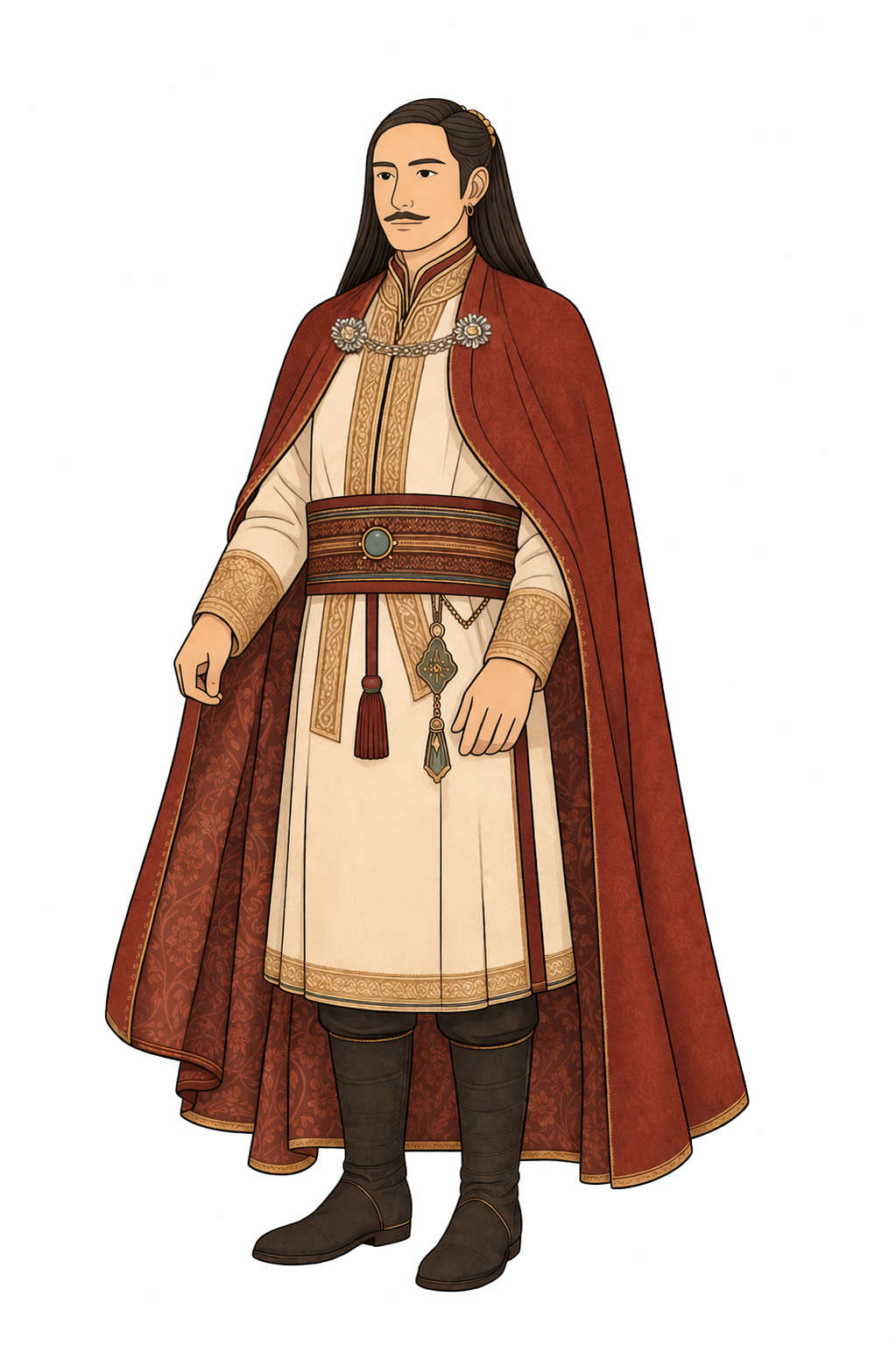
The traditional clothing of Cënasa, the historical political and cultural heartland, has influenced formal dress elsewhere on the island. It is characterized by long lines, relatively restrained silhouettes, fine textile ornament, and elaborate outer garments.
Traditional men's dress consists principally of a long tunic over trousers and boots. Formal tunics commonly have standing collars and decorated vertical plackets, with matching work at cuffs and hem. A broad woven sash encircles the waist and may carry tassels, metal pendants, and other ornaments. The characteristic male outer garment is a large cloak falling from the shoulders, sometimes nearly to the ground. Formal examples may be secured by paired decorative clasps connected by a chain. Patterned or contrasting linings become visible as the wearer walks or turns. Combined with long, loose or partly bound hair, the cloak produces the broad upper silhouette of Canassarene masculine dress.
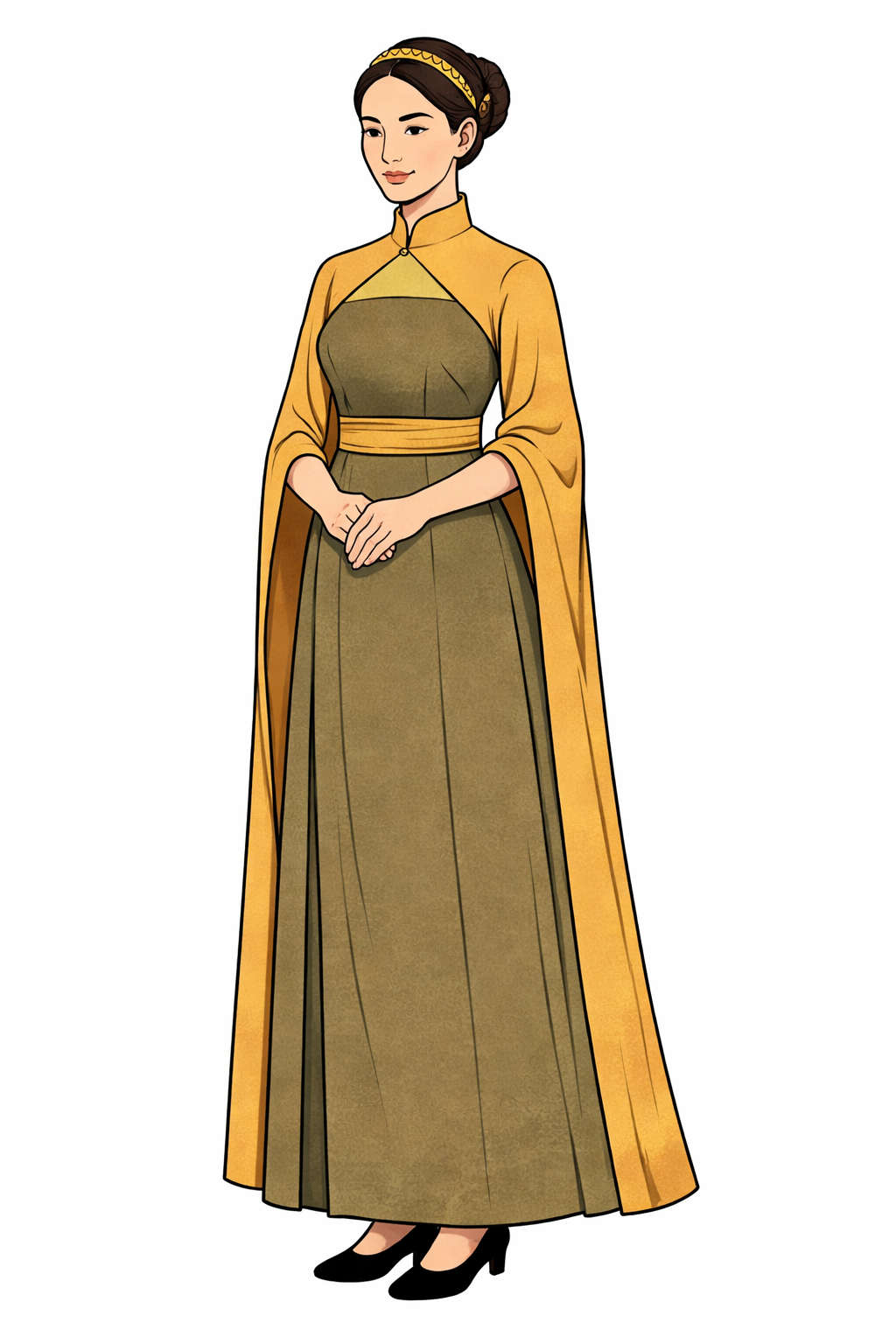
Women's Cënasa clothing typically consists of a fitted or semi-fitted bodice extending into a long skirt, commonly with a broad textile sash. A distinctive outer garment combines cape, mantle, and open sleeve: it covers the shoulders relatively closely while long panels descend along either side of the dress, preserving a narrow upper silhouette while adding vertical movement. Hair is conventionally arranged into a compact bun and may be accompanied by a narrow headband or restrained metal ornament. Formal textiles frequently use subtle woven or embroidered patterns that are less conspicuous at a distance than the garment's decorative borders. Cënasa dress is often regarded as among the more courtly and metropolitan of the regional styles.
Maruen
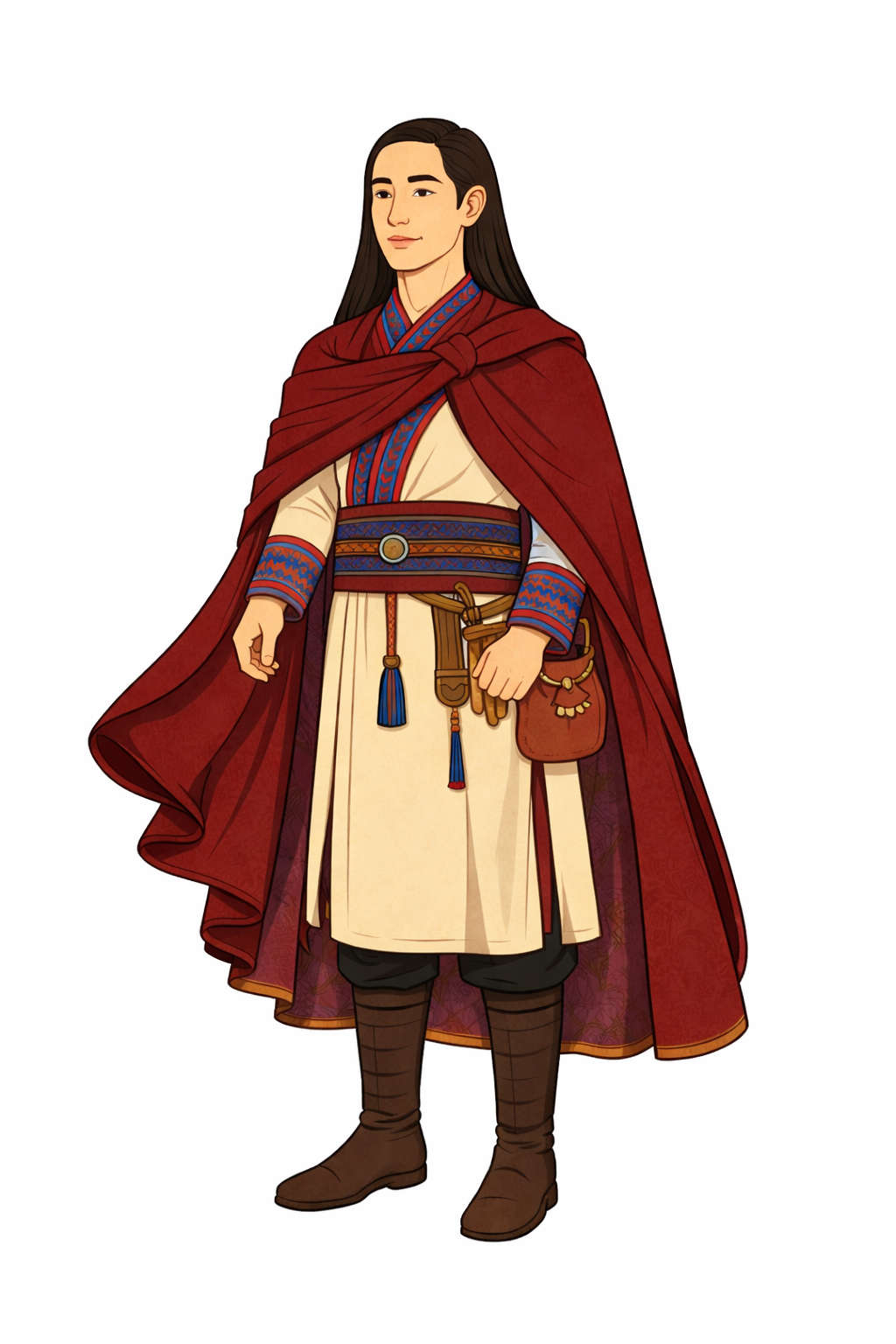
Maruen lies immediately west and southwest of Cënasa and was incorporated comparatively early into the wider Canassarene sphere. Its clothing shares many features with Cënasa dress, while remaining associated with a more pastoral and textile-oriented aesthetic. The highland environment also supported fisca cultivation, which later fed ayun production, though the most refined cloth depended on specialized processing beyond the region itself.
Men traditionally wear pale knee-length tunics over trousers and boots. Crossed or overlapping necklines are common, frequently edged with brightly patterned woven bands, with similar ornament at the cuffs. Broad woven waist sashes remain prominent, but personal decoration tends to emphasize textiles and practical accessories rather than elaborate metalwork. Pouches, small knives, tools, and sometimes gloves may hang from the waist. The traditional male cloak is exceptionally large but comparatively simple: rather than hanging from paired clasps, it may be wrapped diagonally across the torso and gathered or secured near one shoulder, broadening the shoulders and chest while leaving the lower legs unobstructed.
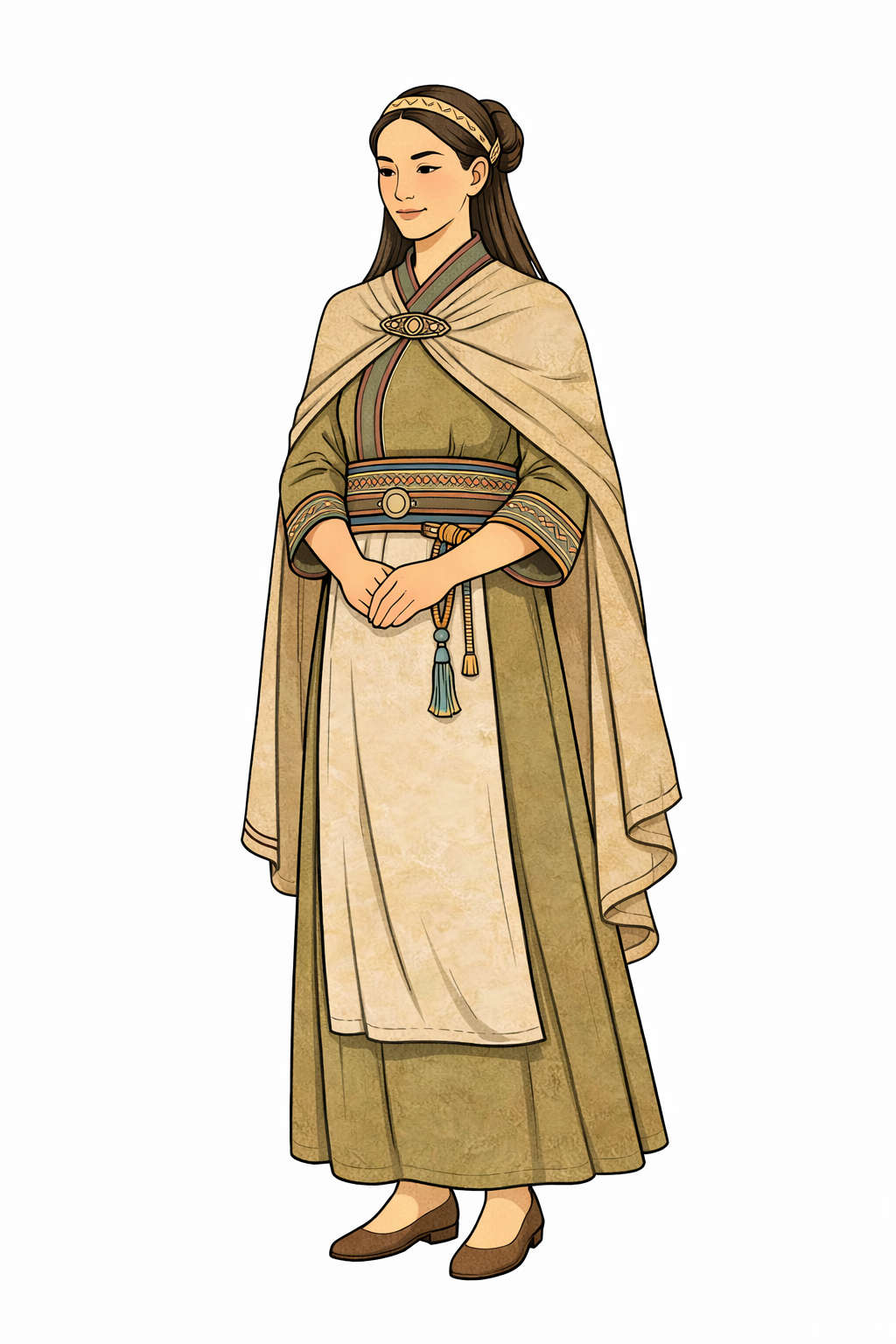
Traditional women's clothing consists of a long dress with a comparatively compact bodice and broad skirt. Apron-like rectangular panels may be worn over the front of the skirt. Patterned woven bands decorate cuffs, necklines, and waist sashes, often in geometric motifs and comparatively earthy colours. Shoulder mantles are draped closer to the body than men's cloaks and fall downward to join the visual mass of the skirt. Hair is usually controlled by a bun, braid, or headband. Maruen's pastoral character should not be read as unsophisticated manufacture; ceremonial garments may show highly developed weaving.
Vërunar
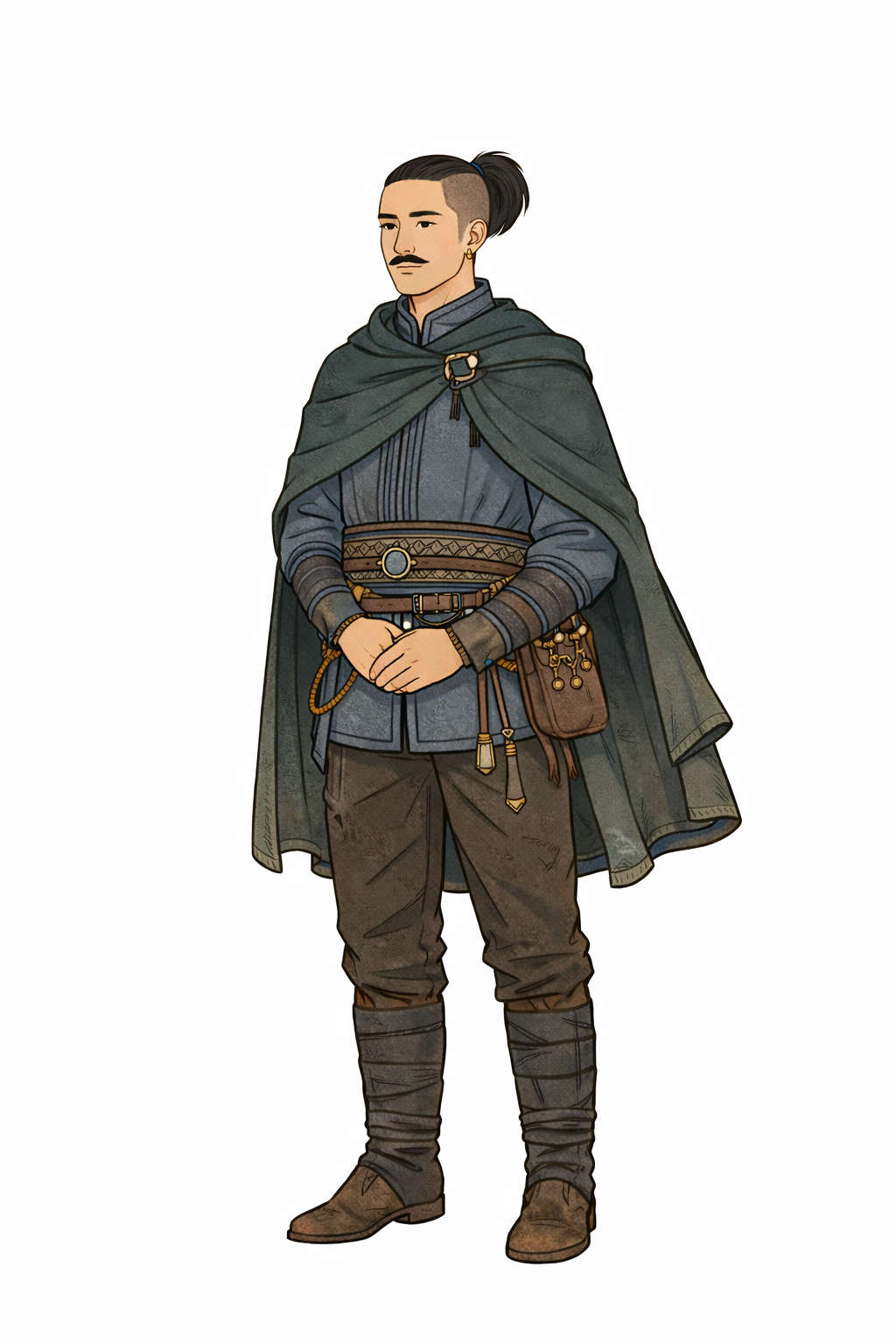
Vërunar occupies much of southern Canassar. Strong winds, rain, and coastal weather have shaped traditional dress. The region includes Minifär, historically an important harbour. Clothing retains many conventions of central Canassarene dress but generally reduces loose or excessively long fabric. Garments tend to be comparatively secure around the neck, wrists, and lower legs.
Men traditionally wear short or medium-length tunics or jackets with trousers, boots or sturdy shoes, and broad waist sashes. Sleeves may narrow or be wrapped at the forearms. Practical belts support pouches, cords, tools, and other equipment. The characteristic male cloak is heavy and broad across the shoulders but generally shorter and more tightly secured than Cënasa or Maruen equivalents. It may be wrapped high across the chest and fastened asymmetrically, giving protection from wind and rain while retaining a broad masculine upper body. Long hair remains culturally significant but may be tied into a high ponytail or otherwise secured rather than worn completely loose.
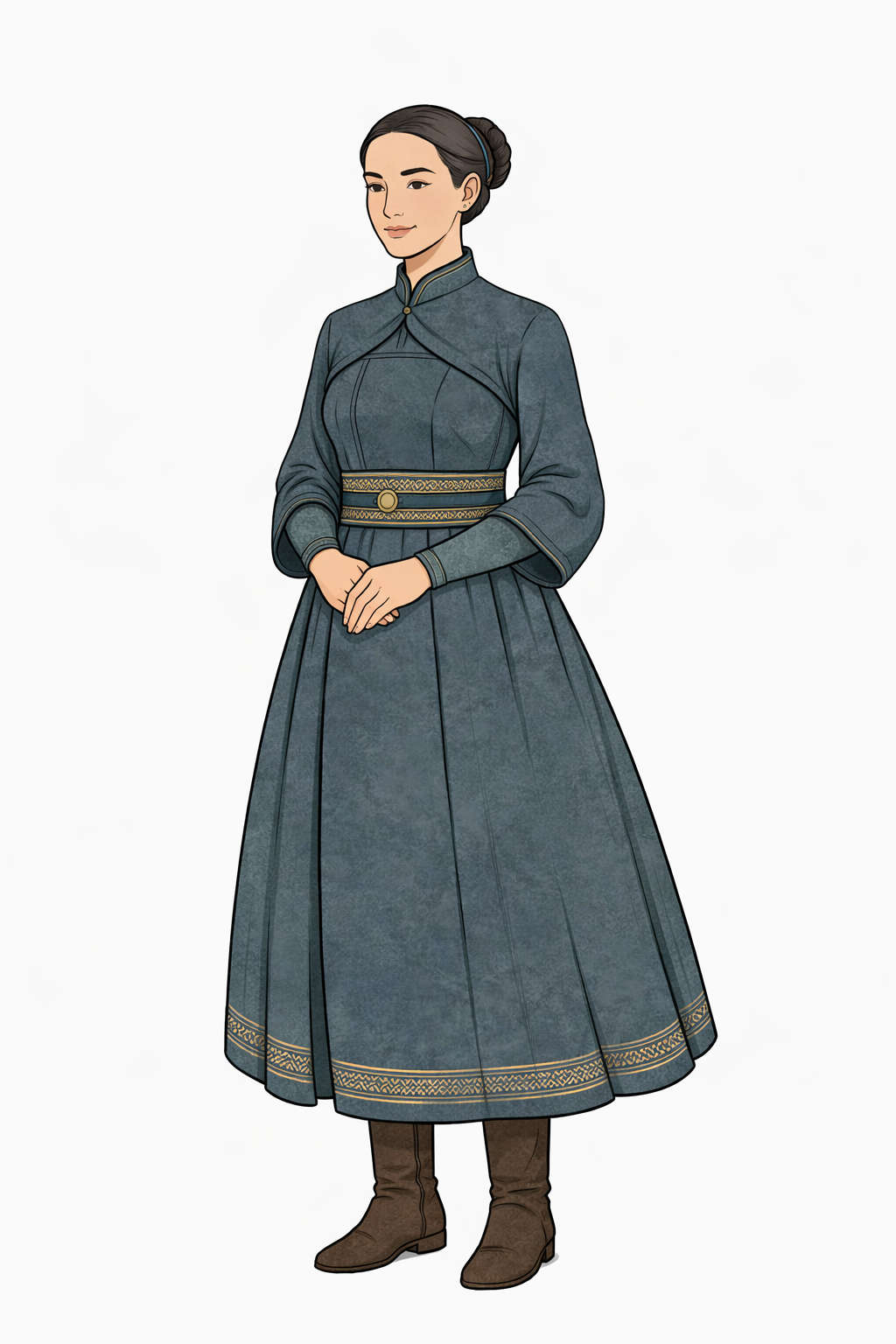
Women's Vërunar clothing is distinguished by high necklines, relatively compact bodices, and full skirts. Small capelets or shaped shoulder coverings add protection without greatly widening the shoulders. The skirt may terminate above the ankle, exposing tall boots and keeping the hem off wet ground. Decorative emphasis frequently occurs at the waist and lower hem. Hair is characteristically secured tightly in a bun. Vërunar dress is distinguished less by uniquely maritime motifs than by the adaptation of established Canassarene garments to maritime conditions.
Armassin
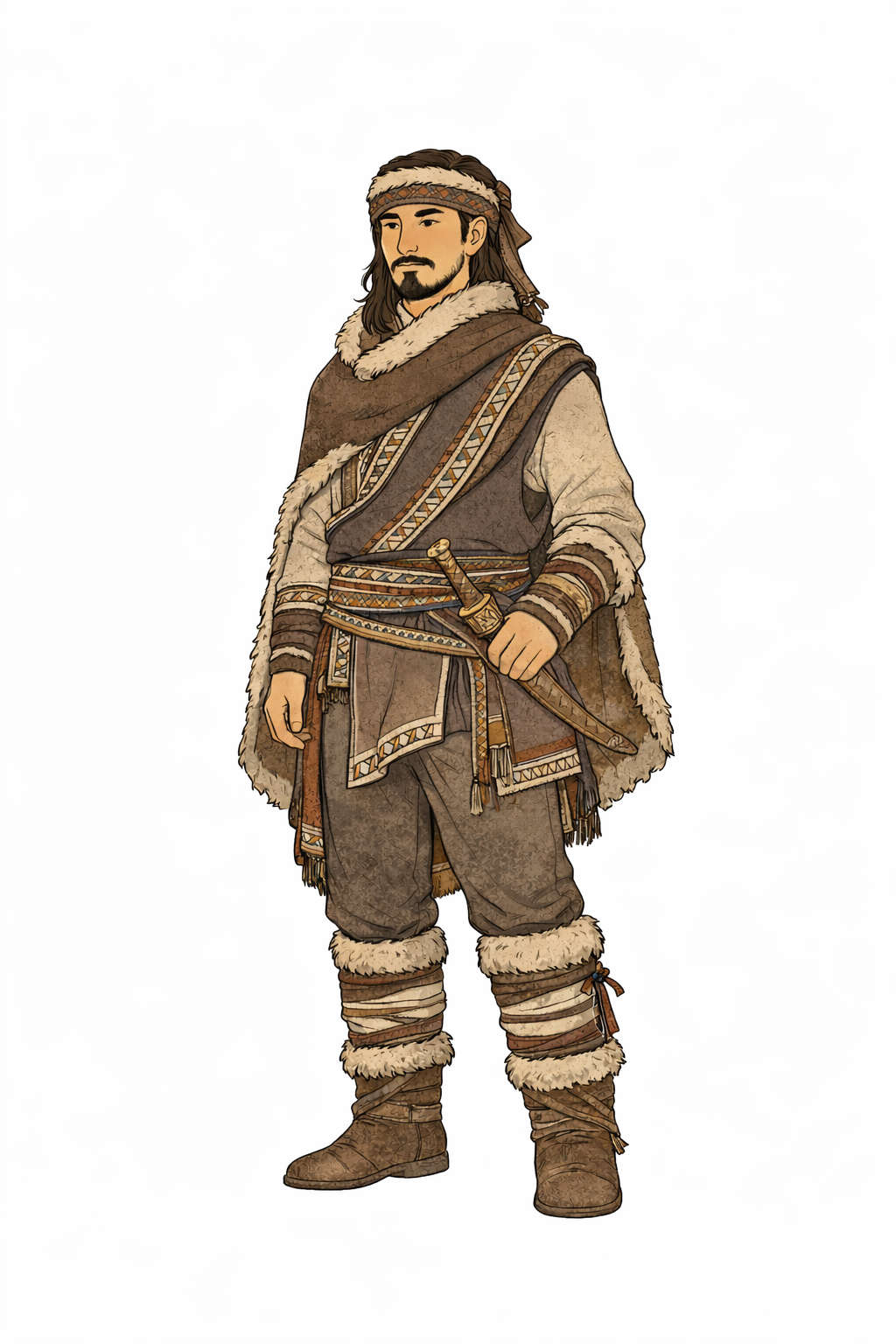
The Armassin highlands, directly north of the Cënasa heartland, are considerably colder than most of Canassar. Traditional clothing makes extensive use of layering, heavy textiles, fur, leg wrappings, and insulated openings.
Men's clothing consists of multiple overlapping tunics and outer layers rather than a single dominant robe. Thick sleeveless or short-sleeved overgarments may be worn above long-sleeved under-tunics. Geometrically patterned woven borders are particularly prominent. The male cloak or mantle is heavy, relatively short, and frequently fur-lined, with insulation concentrated around the neck, shoulders, and chest. Trousers are worn with heavily wrapped lower legs and robust boots. Fur may sit around the knees, ankles, wrists, and collar, while textile or leather bindings close openings against cold air. Broad sashes secure the torso layers and may support weapons or practical equipment.
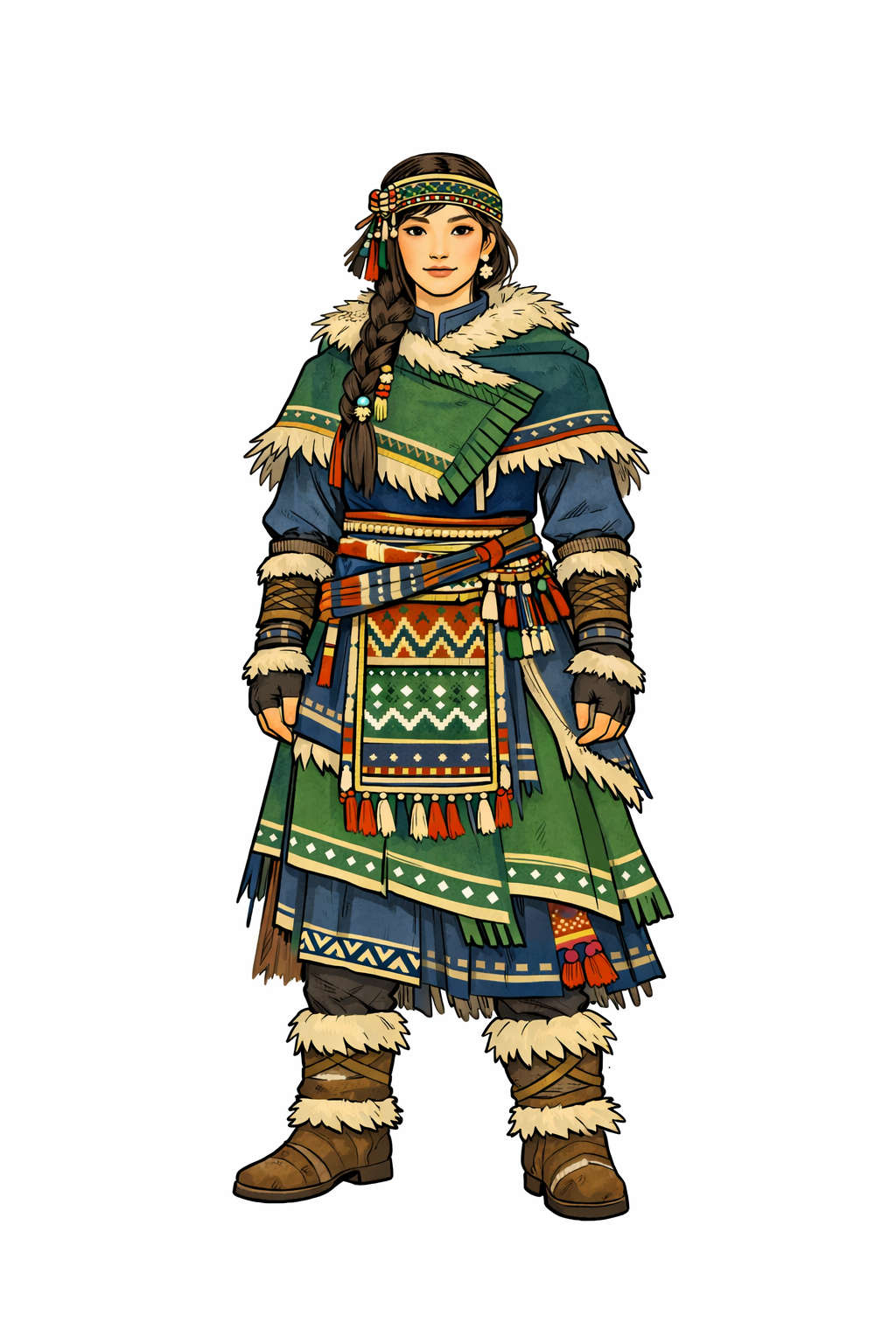
Armassin women's clothing is generally more extensively layered than that of lowland Canassar. Several overlapping skirts, tunics, apron panels, and outer garments may be worn at once, producing lower-body volume without a single floor-length skirt, which would be impractical in snow or on mountain paths. Bold geometric textile patterns are notable, particularly on rectangular front panels, sashes, and hems. Fur-trimmed shoulder garments protect the torso but remain relatively close to the body. Sleeves, wrists, and lower legs are heavily insulated. Female hairstyles may differ from the compact buns of the lowlands: long hair may be tightly braided and combined with woven headbands, beads, or textile ornaments. The distinction from masculine hair remains one of containment: women's hair is arranged rather than allowed to spread freely around the shoulders. Armassin dress is among the most visually distinctive Canassarene traditions, especially in fur and brightly patterned weaving, while its basic proportions remain consistent with wider conventions.
Hälvarinco
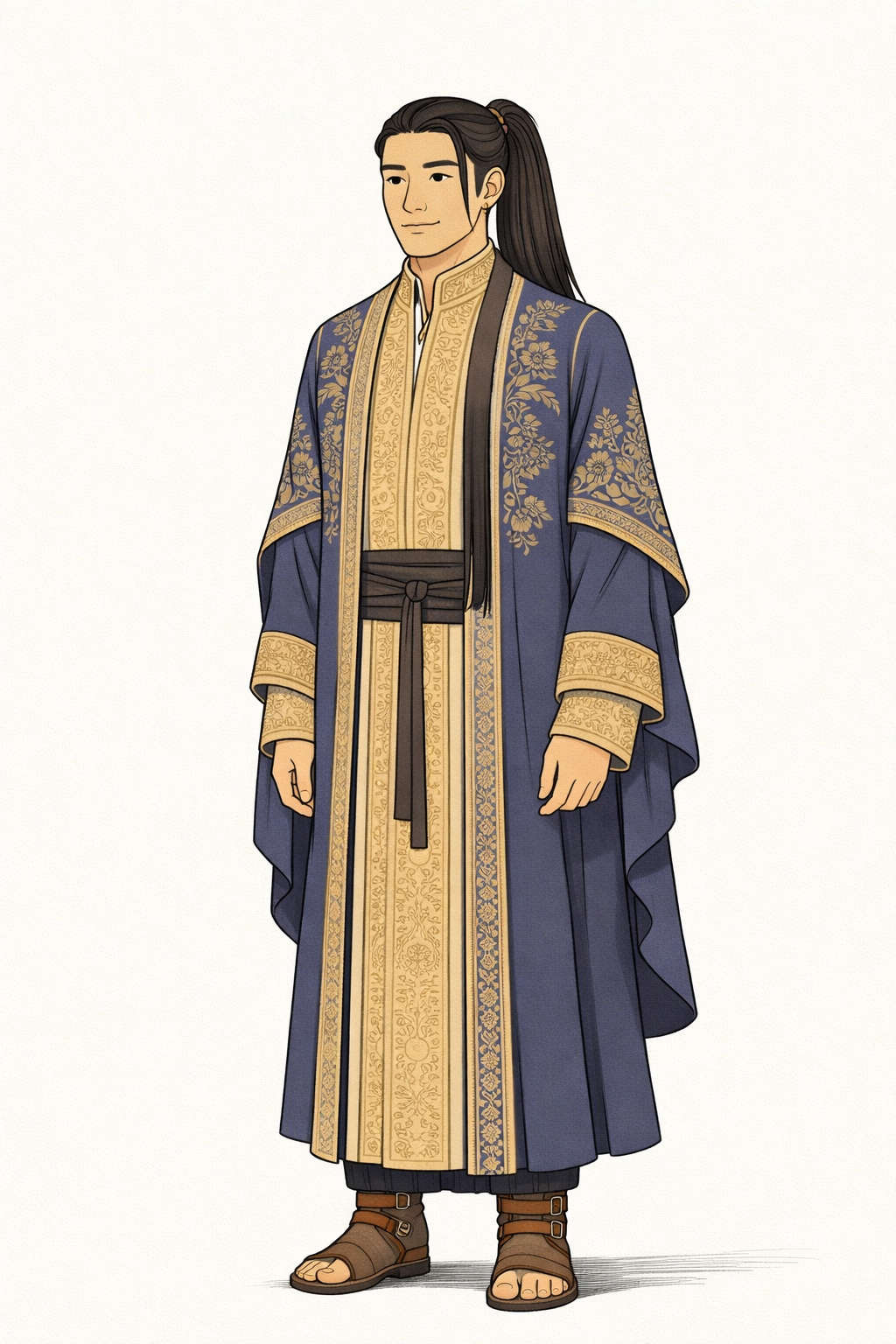
Hälvarinco, in the western and northwestern portion of the island, has a traditional clothing culture notable for long robes, broad sleeves, overlapping panels, and comparatively restrained silhouettes. Historical dress is generally understood to have absorbed more garment forms from maritime and continental neighbors than the styles of the central and southern regions. Contact through western ports and Okhotsk-facing routes—including exchange that also reached Japanese and Sakhalin communities—was incorporated into local clothing rather than retained as a separate imported costume.
Traditional men's clothing is characterized by exceptionally long inner and outer garments. A decorated inner robe may extend nearly to the ankles and possess an elaborate standing collar and vertical front panel. Over it is worn a broad outer robe whose large hanging sleeves or side panels perform some of the visual function occupied by cloaks elsewhere. Floral and vegetal ornament is common on formal clothing, particularly along collars, vertical borders, shoulders, and sleeves. The waist may be secured by a comparatively simple wrapped sash rather than the conspicuous broad belts of several other regions. Long hair remains important and may be gathered into a high ponytail while retaining substantial visual volume. Footwear includes strapped sandals in some contexts, with boots and closed shoes for seasonal and practical dress.
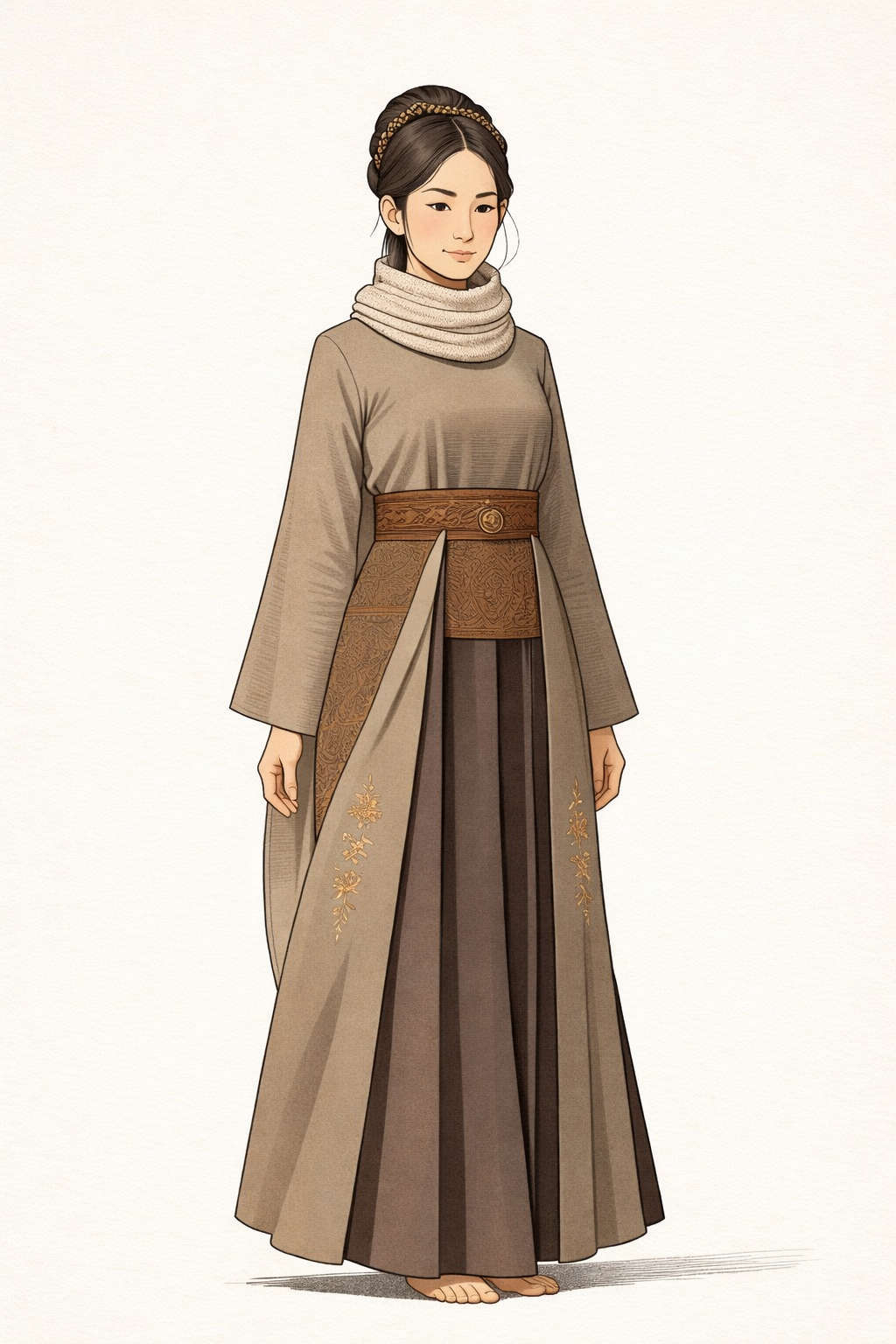
Women's clothing tends toward an especially restrained upper body. Long-sleeved tops may be comparatively plain and accompanied by wrapped collars or neck coverings. A broad decorated waist marks the transition to a much more substantial lower garment. The lower silhouette is frequently built from overlapping vertical panels around a darker central skirt, with decoration concentrated on those panels and toward the lower portion of the garment. Hair is arranged into compact buns, sometimes with braids or narrow ornaments. The style differs substantially from Cënasa construction while preserving the same broad division: masculine dress emphasizes hair, shoulders, and expansive upper garments; feminine dress concentrates volume and decoration below a narrowly defined waist.
Regional differentiation
The regional styles are not isolated costume systems. Migration, intermarriage, political integration, and commerce produced borrowing between neighboring regions. Transitional forms are common near historical boundaries, and urban clothing has often combined elements from several traditions. Ordinary people's garments were influenced as much by occupation, wealth, season, and local materials as by regional identity. Later periods formalized the distinctions as regional dress acquired symbolic importance in festivals, court ceremonies, and modern representations of identity.
Characteristic tendencies remain readable. Cënasa: courtly draping, fine borders, elaborate fastenings, and long formal lines. Maruen: pastoral practicality, woven bands, heavy cloth, and functional accessories. Vërunar: compact, weather-secured garments adapted to wind and rain. Armassin: cold-weather layering, fur, geometric textiles, and extensive wrapping. Hälvarinco: long tailored robes, overlapping panels, and a stronger mark of western and northwestern foreign contact. Despite that diversity, shared proportions keep the major traditions recognizably Canassarene: men's long hair and shoulder-emphasizing outerwear, women's controlled hairstyles and expansive lower garments, prominent waist dress, layered construction, and ornament along borders and structural lines.